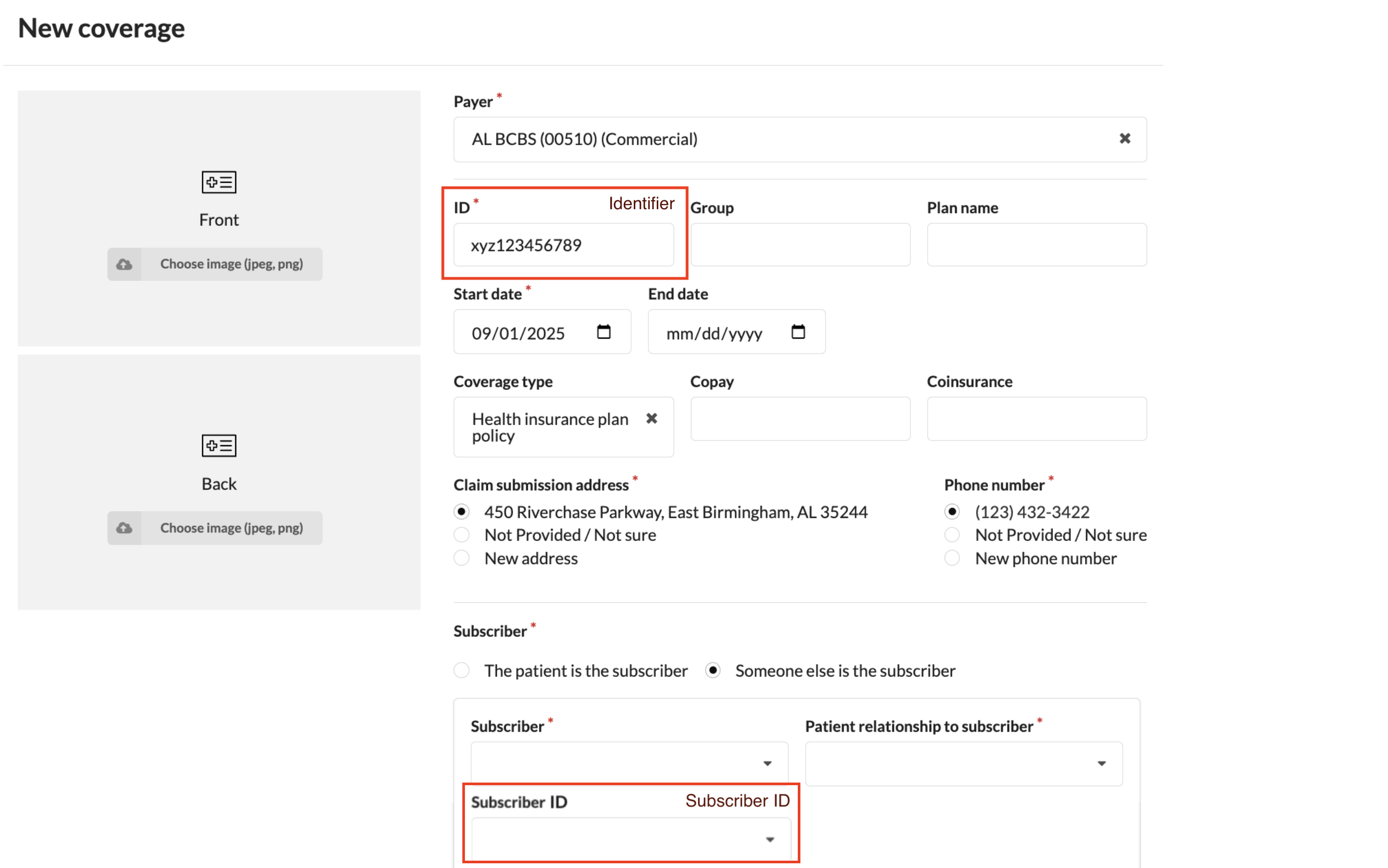
Fixed an issue where verifying a patient’s insurance coverage could fail without showing any error, making the check appear to do nothing. Canvas now shows the reason an eligibility check couldn’t complete, such as an error returned by the clearinghouse.
Fixed an issue where a custom command originated from a plugin’s scheduled task could silently fail to be added to the note when the plugin had been installed while Canvas was already running. A newly installed plugin’s custom commands now work right away.
bugfix
08.06.2026
Today’s release includes the following updates:
bugfix
Fixed an issue where the patient chart’s Goals “Active/Closed” filter classified goals incorrectly. The filter now classifies each goal by its most recent update, so a goal that was updated while active and later closed no longer appears under “Active” or sorts by an outdated due date.
Fixed an issue where installing, updating, or reinstalling a plugin could temporarily block a user’s IP address with a site-wide “403 Forbidden” while the plugin reloaded. Requests to plugin endpoints no longer count toward that block.
sdk
The following were added to the SDK data module:
ImagingReport gains a document_url property, so plugins can read the file attached to an imaging report.
CareTeamMembership gains a service_provider property, so plugins can read a patient’s external care team members (e.g. an external PCP) and their contact info with membership.service_provider.business_fax. It resolves through the new organizational_entity relationship and the new OrganizationalEntity data module.
EducationalMaterial exposes Educational Material command data — the article’s title and abstract, the language it was shared in, and the languages it is available in. The article PDF itself is reached through DocumentReference.
Plugins can now control which items appear in the provider (hamburger) menu via the new ProviderMenuConfiguration effect. For example, a scheduling plugin can hide the native Schedule item so it no longer renders in the menu.
Running canvas validate no longer reports library-owned handler classes in hidden directories (e.g. .venv/) as unreferenced, so plugin authors stop seeing spurious validation warnings. (requires Canvas CLI 0.191.1 or newer)
bugfixsdk
08.05.2026
Today’s release includes the following updates:
api
When a FHIR request is inserting a command into a specific note by passing that note’s ID in the extension, Canvas now checks that the note is not in a deleted or cancelled state. If the note has been deleted or canceled, you get a clear 422 telling you which note it was, instead of the 502 you would have seen before.
sdk
Plugins can now build and maintain your own directory of service providers — the external providers picked when referring a patient, ordering imaging, adding an external care team member, or sending a fax.
Four new events let you customize two contact searches that plugins could not reach before:
FAX__RECIPIENT__PRE_SEARCH and FAX__RECIPIENT__POST_SEARCH — the fax recipient list.
PATIENT_PROFILE__EXTERNAL_CARE_TEAM__PRE_SEARCH and PATIENT_PROFILE__EXTERNAL_CARE_TEAM__POST_SEARCH — a patient’s external care team.
Providers you create are not searched automatically. To offer them in the Refer, Imaging Order, fax, or care team searches, handle that surface’s search event and return them yourself — the guide walks through Offering your own providers alongside the directory.
direct_address — the provider’s Direct (secure messaging) address.
is_active — False once a provider is deactivated; the record is kept, not deleted.
is_customer_managed — True for providers created through the new effects.
science_contact_id — the shared directory contact the provider came from, if any.
It also gains two helpers, as_search_result() and as_search_contact(), which shape a provider for the search surfaces so you do not have to build those payloads yourself.
The SDK Vitals command now supports the Supplemental Oxygen field added to the Vitals command in the previous release, so plugins can record whether a patient continuously depends on high-flow or low-flow oxygen, or uses oxygen intermittently.
apisdk
08.04.2026
Today’s release includes the following updates:
bugfix
Fixed several issues with snoozing protocol cards that come from plugins. Quality measure protocol cards now show the Snooze button when the plugin allows snoozing, snoozing from the card now applies to the protocol you snoozed instead of appearing to do nothing, and the patient’s protocol list refreshes with the updated state right away.
Fixed an issue where a questionnaire launched by an automation kept carrying answers forward after carry-forward had been turned off for that questionnaire — including when a new version was uploaded with carry-forward disabled, or the questionnaire was archived. Automations now use the questionnaire’s current carry-forward setting instead of the setting that was in effect when the automation was created.
ui
The Vitals command now includes a “Supplemental Oxygen” field, so you can record a patient’s ongoing dependence on oxygen alongside the rest of their vitals.
It’s a single-select with three options: “Continuously depending on high oxygen flow”, “Continuously depending on low oxygen flow”, and “Intermittent oxygen consumption”.
Your selection is recorded as a coded LOINC value (question 88658-0, answer list LL4908-1) rather than as free text, and it appears on the committed command and in note printouts alongside the other vitals.
The resulting observation can be read through the FHIR Observation endpoint, where it is returned as a valueCodeableConcept. Supplemental oxygen cannot be created through that endpoint.
The SDK’s Vitals command does not support this field yet — plugin support is coming soon.
For instances with the ENABLE_COLLAPSED_NOTES Constance config setting turned on, opening a patient’s chart no longer auto-expands a note. A note opens only when you click it, create it, or follow a direct link to it. Commands inserted from a quality protocol recommendation now open in a note you can see, instead of landing in a collapsed background note where they appeared to vanish. The setting is off by default and an admin can turn it on under General Configuration; charts on instances without it are unaffected.
The “Submit a support ticket” link has been removed from the help menu. Support requests are now handled through either the in-app support chat bubble or the Help Center.
sdk
Plugins can now subscribe to calendar and calendar-event lifecycle events — CALENDAR_CREATED, CALENDAR_UPDATED, CALENDAR_DELETED, CALENDAR_EVENT_CREATED, CALENDAR_EVENT_UPDATED, and CALENDAR_EVENT_DELETED — to react when a calendar or one of its events is created, changed, or removed.
bugfixuisdk
08.03.2026
Today’s release includes the following updates:
bugfix
Fixed an issue where delegating patient communication on a Review, Image, or Refer command could fail to create the follow-up task when no team was set up to own it. These commands now always create the delegated task and assign it using a clear fallback order: the responsible team when one exists, otherwise the patient’s care team lead, and if there is no care team lead, the staff member who signed the command.
Review commands (lab, imaging, uncategorized document, and consult report review) assign the task to a team with the “Communicate diagnostic results to patient” responsibility.
Image and Refer commands assign the task to a team with the “Coordinate referrals for a patient” responsibility.
Fixed an issue where changing an uncategorized clinical document’s type to a Lab or Imaging Report — whether from the patient chart or in Data Integration — left the original document active in the review queue, creating a duplicate. The original document is now retired automatically, the reviewer’s “to review” badge count updates immediately, and the edit-report modal no longer gets stuck open after switching a document’s type.
Fixed an issue where a patient’s Care Team summary appeared empty when all of the patient’s care team members were external. External care team members now show in the chart’s Care Team summary.
ui
The Refill Requests panel’s assignee filter has several improvements:
It’s now multi-select, so you can combine options instead of choosing just one.
Its individual staff options now list only prescribers — the staff members a refill request can actually be assigned to.
Your care team is now its own filter option, split out from the “Me” and “Me and my teams” options. The refill requests badge count reflects this change.
The Ignore action is now available on all refill requests, not just suspected duplicates.
Labels applied to tasks — including the system-generated “Chart PDF” and “Batch Statements” labels and labels created through the FHIR API — are now scoped to the Tasks module, so they appear and are selectable in the Tasks label filter. Existing labels continue to work everywhere as before.
sdk
Plugins can now show a notification badge — a count (capped at “99+”) with a bolded label — on a provider_menu_item scoped application’s item in the provider menu (the navigation sidebar, also called the hamburger menu), using the new Application Notification Badge effect or the compute_notification_badge hook on the Application handler.
Plugins can now create, update, and mark lab reports as entered-in-error, and attach lab results (tests and values) to an existing report, through the new Lab Report effect — supporting workflows where a report is created first and its results arrive later, such as async OCR.
Plugins can now redirect the user to an internal Canvas page or an approved external URL after an action such as signing a note, opening the destination in the same tab or a new tab, using the new Redirect effect.
Marking an appointment as no-showed from the calendar appointment card’s status dropdown now fires the APPOINTMENT_NO_SHOWED plugin event, so plugins that respond to no-shows trigger as expected. Previously this only fired when marking the no-show from the patient chart.
bugfixuisdk
07.29.2026
Today’s release includes the following updates:
bugfix
Fixed an issue where opening a note whose type hadn’t finished loading could crash the entire patient chart. The affected note now shows a contained error message instead, and the rest of the chart keeps working.
Commands marked “entered in error” no longer appear on a printed note or the generated full-chart PDF. They remain in the audit-trail PDF stamped to the note footer when the note is locked.
Long entries in the “Reviewed:” sections of a printed or PDF note (for example medications, conditions, and allergies) now wrap to the next line instead of being cut off at the right edge of the page.
ui
Uncategorized clinical document / Medical Documents reviews can now be delegated to another staff member or team — with instructions and, optionally, consent to apply the original reviewer’s signature — and routed back to the original reviewer. Learn more.
Long annotations in a command’s autocomplete dropdown are now shortened with an ellipsis and reveal their full text on hover.
sdk
Plugins can now block the Create Coding Gap, Validate Coding Gap, Assess Coding Gap, Defer Coding Gap, and Change Medication commands at commit time by returning a validation error from a {COMMAND}__POST_VALIDATION handler. See Command Validation.
Plugins can now read Change Medication records — to a medication’s directions (sig) — through the new ChangeMedication data model, queryable by a stable identifier and reachable from a patient’s or medication’s records.
Plugins can now read document-review delegations through the new DocumentReviewDelegation data model and subscribe to the DOCUMENT_DELEGATED event, which fires when an uncategorized document review is delegated.
Plugins reading a staff member’s top_clinical_role or top_role_abbreviation through the Staff data model now get the provider’s highest-ranking clinical role (and its credential abbreviation) when they hold more than one, instead of an arbitrarily chosen role.
bugfixuisdk
07.27.2026
Today’s release includes the following updates:
bugfix
Fixed an issue where recent edits to a letter or message in the patient’s timeline could be lost when you kept typing while an earlier edit was still saving. Edits now save reliably, and letters are always saved before being faxed or printed — so faxed or printed letters no longer go out with content missing or blank.
Fixed an issue where opening or bookmarking the patient portal login URL directly could show a “This page isn’t working” error. The login page now loads correctly.
Fixed an issue where scheduling availability could drop calendar holds and staff shift data when a connected Google Calendar’s cached events hadn’t been refreshed in about a month. Availability now refreshes the calendar automatically instead of falling back to incomplete data.
Fixed an issue where a refill denial could fail to send back to the pharmacy when the original refill request had a missing or zero quantity. Denials now transmit reliably in this case.
Fixed an issue where prescriptions the pharmacy had confirmed receiving could stay stuck showing as pending. Their status now reflects that the pharmacy accepted them.
When e-prescribing a prescription fails unexpectedly, the error recorded on the prescription is now a short, readable message.
ui
Diagnosis text and ICD-10 codes are now shown in bold in the Assessment section of note printouts for the Assess, Diagnose, Change Diagnosis, Assess Coding Gap, and Resolve Condition commands.
sdk
Plugins can now read incoming refill requests — including their medication codings and the prescriptions that respond to them — through the RefillRequest data model.
bugfixuisdk
07.23.2026
Today’s release includes the following updates:
bugfix
Fixed an issue where certain imported C-CDA documents could fail to display in the C-CDA viewer. Documents whose sections omit a display name — a pattern used by some external EHRs — now render correctly.
ui
Letters created through the Letter API now appear in the patient’s chart automatically, without requiring a page refresh — consistent with how notes created through the Note API already behave.
bugfixui
07.22.2026
Today’s release includes the following updates:
bugfix
Fixed an issue where adding, removing, or switching a claim’s primary insurance could reprice line items to an outdated fee schedule rate, or to a single unit’s charge on line items with more than one unit. Line items now reprice to the rate in effect on each line item’s date of service — the payer-specific rate when insurance applies, or the self-pay rate when it doesn’t — multiplied by the billed units.
Fixed an issue where plugin application drawer icons could appear as a broken-image placeholder instead of the icon after a chart had been open for several minutes. Icons now load reliably.
ui
The lab requisition form no longer displays the “Canvas Medical” header or the patient signature and payment-authorization section. It now presents a medical-necessity certification and an electronic signature block with the ordering provider and order date, consistent with the imaging requisition form.
sdk
Fixed an issue where a patient’s default practice location and default provider set through the Patient effect were silently ignored — the effect returned success but the values were never saved. Both are now saved to the patient’s record whenever they’re included in a create or update.
bugfixuisdk
07.21.2026
Today’s release includes the following updates:
bugfix
Fixed an issue where assigning a task in a filtered queue reset the list to the first page. Assigning a task now keeps your place in the list.
api
Preferred names (nicknames) received through integrations are now trimmed of surrounding whitespace, and a preferred name containing only whitespace (e.g. a single space) is stored as empty instead of a blank space.
bugfixapi
07.20.2026
Today’s release includes the following updates: bugfix
Fixed provider signatures not appearing when previewing or printing letters for staff who have multi-factor authentication enabled.
config
Admins can now enable a new instance-wide Constance config setting, HIDE_ASSIGNEE_IN_NOTE_HEADER, that makes the note header’s “Assigned to” control read-only: the note’s current assignee or team is still shown but can no longer be changed from the header, and the control is hidden entirely for unassigned notes. Off by default, so existing behavior is unchanged.
bugfixconfig
07.16.2026
Today’s release includes the following updates: sdk
Dynamic action buttons. Plugins now have more control over the buttons in the note footer and patient chart, and those buttons stay in sync with live data instead of being rendered once on page load:
Refresh a note’s or patient’s buttons on demand — for example after a command is committed or a note changes state — so their labels, colors, and visibility reflect the latest data, with the Reload Action Buttons effect.
Build footer buttons that move a note through its lifecycle — sign, lock, push charges, discharge, and more — with Note State Action Buttons. Each button appears only when its transition is available, and Canvas ships ready-to-use Sign and Lock buttons.
The claim error/warning scrubber checks no longer display the “This claim has no Rendering Provider Tax ID” error. A rendering provider Tax ID is not required under group/organization billing.
Changing a claim’s Rendering Provider from the dropdown now saves correctly when the selected provider has no Tax ID, instead of failing with an error.
Fixed an issue where, when using buttons to insert commands into a note, a command could be inserted into another provider’s collapsed background note instead of the note you had open. Commands now target the note you currently have open, or start a fresh note when all notes are collapsed.
config
On outgoing prescriptions, Canvas can now use the note’s practice location for the prescriber’s address, business name, phone, and fax instead of the prescriber’s primary practice location. This behavior is off by default; reach out to Canvas support to enable it for your instance.
sdk
Plugins can now choose the practice location that supplies the prescriber (“from”) address on an outbound electronic prescription, on a per-prescription basis, so a provider working across multiple offices can route a specific medication to a specific site. When set, the selected location’s business name, phone, fax, and street address replace the prescriber’s default. Pass practice_location_override to the Prescribe command’s send() method.
bugfixconfigsdk
07.14.2026
Today’s release includes the following updates: bugfix
Fixed the Revenue billing-queue sidebar reordering itself when a claim is saved. The queue list now keeps its normal, consistent order during live updates instead of flickering and only settling after a page refresh.
Outbound faxes to recipients whose names are longer than 100 characters now send successfully — the recipient name is automatically shortened rather than the send being rejected with an error.
Improved performance when using autocomplete in chart commands.
Fixed two issues with the calculated BMI in the vitals table: it displayed “Infinity” when a patient had no recorded height (the cell is now blank until a height is recorded), and the “Latest” BMI could combine a height and weight recorded on different dates. The Latest BMI now uses the most recent reading that has both a height and a weight, so it always reflects a single visit.
bugfix
07.13.2026
Today’s release includes the following updates:
bugfix
Fixed an issue where a lab order that included an open-choice Ask-at-Order-Entry (AOE) question could fail with an error. These orders now complete successfully.
ui
The annotations shown next to command search results (for example coding-system labels like RxNorm) are now larger, higher-contrast, and rendered in a sans-serif font, making them easier to read.
sdk
Plugins subscribing to the APPOINTMENT_METADATA_CREATED and APPOINTMENT_METADATA_UPDATED events now receive the associated appointment id and patient id in the event context, which was previously empty.
Fixed an error where creating a billing line item through the AddBillingLineItem effect failed when the charge’s name exceeded 255 characters. The line item’s description now uses the charge’s short name, so these charges save correctly.
bugfixuisdk
07.09.2026
Today’s release includes the following updates:
bugfix
Fixed an issue where canceling the Edit provider details modal on a claim kept your changes instead of discarding them. Provider and facility edits are now saved only when you click Update.
sdk
canvas validate and canvas install now catch sandbox-incompatible code and Custom Data mistakes before a plugin is deployed. Problems that would previously fail silently at runtime — like tables that never get created or code the sandbox rejects — are now reported up front with clear errors, and canvas install stops before uploading when a violation is found. (requires Canvas CLI 0.177.0 or newer)
bugfixsdk
07.08.2026
Today’s release includes the following updates:
bugfix
Fixed an issue where printing a letter could overwrite or clear its content, and where a printed letter could still be edited from another user’s session. Letters now stay locked after they are printed.
Fixed a Google Calendar sync issue where, if any one calendar on the instance could not be found, events on the other calendars stopped syncing. Syncing now continues for the remaining calendars.
Fixed an issue where a temporary error while loading a plugin’s command data could cause that plugin’s custom commands to silently disappear from notes. Custom commands no longer drop out after a transient load error, and any genuine load failure is now surfaced instead of hidden.
Further optimizations of the Claims page to improve load times.
ui
Deleted notes and canceled appointments now display more context on the patient timeline — their title, DOS, and provider — making it easier to tell which appointment was removed.
sdk
All committable command SDK data model managers now support a committed() convenience method: Assessment, ChartSectionReview, DetectedIssue, Device, Goal, ImagingOrder, ImagingReview, Immunization, ImmunizationStatement, LabOrder, LabOrderReason, MedicationStatement, NoteTask, Referral, StopMedicationEvent, and VisualExamFinding. As part of this change, the default query managers for these models — except Immunization and ImmunizationStatement — now exclude deleted records by default, consistent with the rest of the SDK’s clinical data models. Plugins that relied on these managers returning deleted records will need to account for the change.
Fixed an issue where calling .committed() or .active() on the Immunization or ImmunizationStatement SDK data models raised an error instead of returning records. Both queries now work.
Restored compatibility with plugins that look up chart commands by the schema_key from their manifest. Custom commands installed after June 15, 2026 were stored with an internal version suffix, which broke plugin code that matched on the bare schema_key. Existing entries are corrected automatically when this release is deployed.
Deleting a calendar event through the SDK is now idempotent — removing an event that has already been deleted no longer raises an error.
Patient addresses created or updated through a plugin now save the correct US state. Previously the state could be dropped or stored incorrectly when an address was written via a plugin effect.
bugfixuisdk
07.06.2026
Today’s release includes the following updates:
bugfix
Fixed an issue where opening the refill-request or outstanding-referral worklist across all patients could be slow and temporarily slow down other parts of Canvas for everyone on the instance. These worklists now load quickly.
Fixed an issue where Approve Refill and Deny Refill could not populate the medication for a refill request whose original prescription wasn’t in Canvas (for example, prescriptions migrated in from another EHR), so the refill couldn’t be completed. You can now approve or deny these refill requests.
Appointments rescheduled via a SchedulingApplication handler that opens in a new window no longer get stuck in the Scheduling state (which hid the note’s footer buttons).
bugfix
07.01.2026
Today’s release includes the following updates:
bugfix
Admin and front-desk staff now have their primary practice location automatically filled in when opening the scheduler from a patient’s chart, matching the behavior already available to schedulable providers.
Improved performance of the claims page so it loads faster during normal use.
Improved performance of the Revenue queue list so it refreshes more efficiently during high-volume claim activity (e.g., batch and clearinghouse/ERA posting), keeping queue claim counts and balances responsive.
Fixed an issue where some chart notes could get stuck loading after a platform update.
sdk
Plugin developers can now replace the built-in Schedule Modal with a custom Scheduling Application that takes over all scheduling entry points — the schedule page, patient chart, calendar drag-and-drop, and reschedule flows.
Plugin developers can now supply their own namespace access keys when a plugin first creates a Custom Data namespace, instead of relying on Canvas to auto-generate them — useful for deterministic CI setups or restoring previously-known keys. (requires Canvas CLI 0.173.0 or newer)
The Canvas SDK data module adds ValueSet find() lookups to the Interview, ImagingReport, and ReferralReport querysets, letting plugins filter records by a value set (e.g. ReferralReport.objects.find(DialysisServices)).
ProtocolOverride querysets add active(), adjustments(), and snoozes() convenience methods for filtering protocol overrides.
Plugin developers can now query ReferralReportCoding through the Canvas SDK data module.
Plugin handlers for note state-change pre-events now run during note validation and fire exactly once, so they no longer miss or double-fire.
bugfixsdk
06.29.2026
Today’s release includes the following updates: bugfix
Fixed an issue where questionnaire result narratives generated by a plugin did not appear in the committed questionnaire command until the page was manually refreshed. They now appear immediately.
Fixed an issue where refilling or re-prescribing a medication left it incorrectly marked as Inactive. The medication’s status is now reconciled when the prescription is created, so previously-refilled medications correctly show as Active.
Fixed an issue where signing a Lab, Imaging, Consult Report, or Uncategorized Document review from a report panel could intermittently fail silently — the review wouldn’t complete (it stayed flagged as review-required) and the typed annotation was discarded. Signing these reviews now completes reliably and preserves the annotation.
ui
A note can now record a supervising provider, selectable from a new dropdown in the note header. Locking the note or pushing its charges propagates the supervising provider onto the resulting claim. Claims can be billed incident-to using the new supervising-provider section and incident-to toggle in the claim’s provider details. When a claim is billed incident-to, the supervising provider becomes the rendering provider across the CMS-1500 (paper), 837P (EDI), and Candid billing outputs.
sdk
The Patient SDK effect gains several new capabilities:
Plugins can now supply their own patient key when creating a patient via CREATE_PATIENT; the supplied key becomes the new patient’s identifier, so the plugin can reference that patient in follow-up effects within the same execution. When no key is supplied, the server generates one as before.
Plugins can now set a patient’s biological race and cultural ethnicity codes via the biological_race_codes and cultural_ethnicity_codes fields. Previously these values were silently dropped by the effect interpreter.
Plugins can now read and write supervising-provider data on notes and claims through the SDK:
Effects: the Note effect accepts a supervising_provider_id — which propagates onto the resulting claim when the note is locked or its charges are pushed — and Claim effects set the supervising provider (by staff link or free-text) and toggle incident_to.
Fixed an issue where creating a DocumentReference through the FHIR API (POST /DocumentReference) intermittently failed with a 502 error for certain document types.
Patient charts and individual notes for patients with a large amount of clinical data now load quickly instead of timing out.
sdk
Fixed an issue where a transient network or database error during plugin installation could disable the plugin until it was manually re-enabled. The plugin runner now retries these transient failures instead of disabling the plugin.
bugfixsdk
06.22.2026
Today’s release includes the following updates:
bugfix
Fixed an issue where marking a patient as deceased canceled their upcoming appointments but left the associated claims in the appointment queue as orphaned unsigned notes, with their encounters still open. Now, when a patient is marked as deceased, the claims on those appointments are moved to the trash and the encounters are canceled.
Fixed an issue where a security lockout could incorrectly block automated requests, such as document printing and faxing, across an entire instance. These requests are no longer affected by the lockout and now process reliably.
ui
The Patient Timeline Note Filter previously labeled “Show Deleted Notes” is now “Show Canceled Appointments and Deleted Notes,” making it clearer that this toggle reveals canceled appointments as well as deleted notes.
bugfixui
06.18.2026
Today’s release includes the following updates:
sdk
The following were added to the SDK data module:
ChartSectionReview exposes reviewed chart section content (title and narrative), so plugins can reproduce these visit-summary sections as they appear in Canvas.
VisualExamFinding exposes visual exam findings (title, narrative, and a viewable image URL), so plugins can reproduce them as they appear in Canvas.
PluginCommand exposes registered custom command metadata (label, section, schema key), so plugins can read back custom command display details.
ContentType exposes Django content type IDs, so plugins can work with generic relations and permalinks.
The canvas CLI now validates plugins before deploy — a static manifest layout check and a sandbox-load that imports every handler the way the runner will — so problems are reported right in your terminal at deploy time instead of having to watch the instance logs for errors after install. (requires Canvas CLI 0.167.0 or newer)
sdk
06.17.2026
Today’s release includes the following updates:
bugfix
Fixed an issue where single sign-on (SSO) failed when a duplicate Staff record shared the same email address and one of the records was inactive. The login flow now resolves to the active Staff record.
Fixed an issue where closing a side panel (such as a Task) opened from a permalink or deep link did nothing — the panel immediately reopened, and the only workaround was switching tabs. Clicking the X now closes the panel as expected.
Fixed an issue where inbound faxes could stop being received when the fax provider returned a transient gateway error. The poller now skips and retries instead of crashing, and pages through the full fax history rather than only the first page, so high-volume accounts reliably receive every inbound fax.
Fixed an issue where the “New note” type dropdown extended off-screen behind Canvas Chat on instances with many note types. The dropdown now scrolls within view.
Fixed an issue where adding a coverage to a claim did not use the most up-to-date subscriber ID.
Fixed an issue where a provider without an NPI creating a billable note could leave behind a broken note with no state. Note creation is now atomic, so it either fully succeeds or rolls back cleanly with no orphaned notes.
Fixed an issue where a provider with the same NPI on multiple Canvas instances sharing a Health Gorilla account would receive each inbound diagnostic report on every instance. Reports are now matched on patient as well as recipient NPI, so each report is delivered only to the Canvas instance the patient belongs to.
Fixed an intermittent error that could block creating or signing a note and show “an error occurred loading this note,” most often after a browser tab had been left in the background or discarded by the browser.
sdk
The following were added to the SDK data module:
The new DiagnosticReport view lets plugins look up the DiagnosticReport(s) linked to a Lab Report, fetch a DiagnosticReport by its ID and follow it back to the originating Lab Report, and filter DiagnosticReports by patient. Read more
Report-level lab remarks (LabReport.remarks), so plugins can surface the same lab report comments shown in the Canvas UI.
Imaging report coding detail (ImagingReport.codings), so plugins can surface the same imaging report detail shown in the Canvas UI.
bugfixsdk
06.15.2026
Today’s release includes the following updates: bugfix
When a patient’s coverage payer is updated after a claim is created, the updated coverage now appears as an available option in the claim coverage table — re-add it to refresh the claim with the new payer. Previously the updated coverage was hidden, leaving no way to switch the claim to it.
The SDK’s Appointment.cancel() and Appointment.revert() effects now validate the appointment’s current state and run the same side effects as the equivalent actions in the UI — such as updating the linked encounter, moving associated claims to the correct billing queue, updating the appointment’s status, and emitting the note state-change event that plugins subscribe to.
Fixed a bug where a plugin that registered a Custom Command could not be uninstalled and errored out. Plugins with associated Custom Commands now uninstall successfully, and any Custom Commands already inserted into notes are preserved.
Custom command schema keys are now unique across all installed plugins. Installing a plugin whose manifest declares a schema_key already owned by another installed plugin now fails with a clear validation error instead of silently overwriting the existing command.
bugfixsdk
06.10.2026
Today’s release includes the following updates:
bugfix
Fixed an issue that could prevent letters with malformed attachments from being faxed or printed. Affected letters now generate and send successfully.
Downloading a letter as a PDF is now more reliable: large letters with many attachments no longer fail to generate, and a single attachment that can’t be loaded no longer breaks the whole download — the letter now downloads without it.
Fixed an issue where editing a staged Lab Order via the SDK wiped selected tests when the lab partner was unchanged.
Fixed a bug where an appointment provider reassignment through the FHIR API only updated the Appointment’s associated provider and not the corresponding Note’s provider.
FHIR Appointment search responds faster on instances with many appointments or with multiple reasons-for-visit per note.
Fixed an issue where future appointments did not have their status updated to cancelled when a patient was marked as deceased.
Editing a Facility’s address from the admin settings page now refreshes the address on every patient assigned to that facility, so mailing, billing, and reports stay in sync.
In the Data Integration queue, clearing a patient you had selected on a task row no longer causes an error — the row now resets to the unselected state as expected.
Insurance eligibility check results no longer show spurious “could not match patient/coverage” errors caused by benign formatting differences in the payer’s response (capitalization, punctuation, leading zeros, or an abbreviated first name). These responses now correctly display the returned benefit information instead of a failed/error result.
sdk
Plugins can now originate, edit, commit, enter-in-error, and delete a POC Lab Test command via the SDK, and respond to its command lifecycle events. Read more
The Approve Refill and Deny Refill commands are now available in Beta in the Commands Module, so plugins can respond to their command lifecycle events — see Approve Refill and Deny Refill.
The Reference command — a display-only snapshot of a diagnostic view (such as lab results) added to a note — is now available in Beta in the Commands Module, so plugins can respond to its command lifecycle events.
The SDK chart section review, imaging review, lab review, referral review, and uncategorized document review commands have been released to all customers (GA). Current status of commands can be found here.
The acting user (actor) is now available on the post-create note state change events (NOTE_STATE_CHANGE_EVENT_CREATED and NOTE_STATE_CHANGE_EVENT_UPDATED), matching NOTE_STATE_CHANGE_EVENT_PRE_CREATE — so plugins can tell which staff member transitioned the note’s state.
Plugins can now display a notification badge — a small count such as unread items or open tasks — on a global or patient_specificapplication icon, in the app drawer or on the panel. Provide an initial count when applications load, or push live updates with the ApplicationNotificationBadge effect.
bugfixsdk
06.04.2026
Today’s release includes the following updates:
Tasks now support a dedicated optional priority field with values STAT, Urgent, and Routine. This release includes changes across the UI, commands, FHIR API, and SDK:
The patient and global task panels support sorting and filtering by priority (sort order, high to low: STAT > Urgent > Routine > none). The patient chart task panel also includes a Priority filter and the ability to set or clear priority directly from a task card. Read more.
Added STAT as a new priority option on Imaging Order and Refer commands. These commands already supported Routine and Urgent; the dropdown now includes all three. Refer and Imaging Order commands continue to attach Urgent / Routine task labels only if those labels are configured under Admin Settings → Task Labels, to not disrupt existing workflows.
Task.priority is supported on Create, Search, Read, and Update on the Task FHIR endpoint, and priority is available as a search parameter.
The priority field is now included in the context payload for all TASK_COMMAND__*events.
bugfix
Fixed an issue where refilling a medication via the SDK selected the wrong dispense option when a medication offers more than one similar unit (for example, “0.5 mL vial” vs “Milliliter”) and a description is passed.
sdk
Plugins can now attach custom HTML to staged commands via the Canvas SDK. Read more
Plugins can now block command deletion by returning a CommandValidationErrorEffect from a *_COMMAND__PRE_DELETE handler. This enables custom validation rules — e.g. blocking deletion of an Urgent or STAT referral.
bugfixsdkuiapi
06.02.2026
Today’s release includes the following updates:
bugfix
Fixed an issue on the patient portal where the mobile menu stayed open after tapping an item; the drawer now closes automatically on navigation.
ui
The note filter on a patient’s chart now includes an option to show deleted notes in the timeline — by default, deleted notes are hidden.
sdk
Added new note and appointment state-change effects:
Plugins can now control command button visibility in the patient chart. The new ConfigureCommandButtons effect lets plugins hide or disable buttons in chart summary sections and result cards, with changes applied in real time.
bugfixuisdk
05.26.2026
Today’s release includes the following updates:
bugfix
Removed an inaccurate “Invalid auth token” warning that appeared on patient charts at Zus-enabled customers for users who don’t have Zus access.
Labcorp PDF and faxed lab requisitions now default to Patient bill. Previously, requisitions could be routed to the practice when no insurance was on file, or sent with an ambiguous code that Labcorp typically billed to the practice.
ui
A new activate_deactivate_patient permission now controls who can toggle a patient’s active status. Staff without this permission will see the “Active patient” checkbox disabled on the Demographics form. The permission is granted by default to the “Profile write” authorization group and to all existing staff users.
sdk
Plugins can now subscribe to custom command events across the full command lifecycle, including originate, update, commit, delete, enter-in-error, and execute-action.
Custom commands can now be marked as entered in error via the SDK.
bugfixuisdk
05.21.2026
Today’s release includes the following updates:
ui
The Data Integration fax list can now be filtered by inbound number, for practices receiving faxes on multiple numbers.
sdk
Plugins can now read StaffMetadata from the SDK data module, and write to it with the new StaffMetadata effect.
Plugin logs can now be filtered by plugin and handler in both the admin UI and the canvas logs CLI (--plugin, --handler). (CLI flags require Canvas CLI 0.150.0 or newer)
Plugins can now access patient photos directly from the SDK.
Plugins can now request clipboard read and write access for their iframes via the new CLIPBOARD_READ and CLIPBOARD_WRITE permissions in CANVAS_MANIFEST.json. (requires Canvas CLI 0.151.0 or newer)
Fixed a bug where invoking CreatePatientExternalIdentifier effect would silently delete pre-existing unexpired identifiers on the same patient. Multiple invocations now correctly result in multiple external identifiers as expected.
uisdk
05.18.2026
Today’s release includes the following updates:
bugfix
Fixed a bug with Data Integration lab report values where values were not persisted if the report types field was modified.
Fixed an issue where an assessed condition could disappear from a note’s billing footer if a Resolve Condition command for the same condition was added and then deleted before being committed.
Fixed an issue where a goal that had been closed via a Close Goal command could still appear in the list of active goals if any earlier update had an active lifecycle status.
Lab values are now associated with their corresponding tests when a Lab Report is uploaded via Data Integration.
Reduced intermittent errors and stalled requests during peak business hours caused by stale connections to internal infrastructure.
sdk
The notes field on conditions is now readable from the SDK, so plugins can access the free-text note attached to a condition.
Plugins can now respond to the new GET_NOTE_RESTRICTIONS event with a NoteRestrictionsEffect or push real-time updates with a NoteRestrictionsUpdatedEffect to implement custom note access policies, including concurrent-edit locking and role-based access control per note type. Read more.
Plugins can now respond to events for the Visual Exam Finding command, enabling workflows around image-based exam findings captured in notes. Read more.
bugfixsdk
05.14.2026
Today’s release includes the following updates:
bugfix
Fixed several command-related issues:
Commands added to a note from a chart button could occasionally disappear from the note body.
Deleting a command no longer leaves the note out of date until refresh.
When post-processing events after a command was committed or marked enter-in-error failed, the command appeared committed/EIE in the UI but related records could end up out of sync. The status change is now rolled back if any post-processing records fails.
Commands could move to “in review” even when required fields were missing or invalid; the move is now blocked until the validation errors are resolved.
Prescribers who already had an SPI number on file were still being prompted to add one before reviewing an adjust-prescription command.
Questionnaire comments can be opened on locked or signed notes for multiple-choice fields that accept comments.
Goals could not be updated when the start date field had been cleared.
The schedule view was not honoring the configured order of providers; providers now appear in their assigned schedule-column order.
Fixed crashes in the Day and Week views in the schedule that could occur when an appointment was created, edited, or canceled in real time — most commonly right after switching dates or location filters.
The Letter author dropdown now searches the full staff directory as you type, so customers with more than 350 active staff members can find and select any provider (previously the dropdown showed only the first set of providers).
CCDA exports for patients without an assigned team lead now return a clear error explaining the missing team lead, instead of a generic server error, so integrations know to correct the patient record rather than retry the export.
Resolved a source of app-wide slowness during Health Gorilla lab report ingestion that was tying up the database while Canvas waits on it.
Fixed a bug related to Timed out after 60s waiting for namespace '<namespace>' to be created by the schema manager errors during plugin install, which would leave the plugin disabled and require a manual re-enable to recover.
ui
Redesigned the diagnostic imaging requisition: provider name, license, and NPI now appear in a dedicated Ordering Provider block at the top; a medical-necessity certification, an electronically-signed attestation with a timezone-stamped date, and an order-validity statement now appear at the bottom.
sdk
Data
Added a LabTest relationship to LabValue in the SDK data module, enabling plugins to associate lab values with their corresponding tests. See the LabTest reference and Ordered vs. result tests.
Staff member signatures are now accessible via the SDK data module. Read more.
Events
Plugins can now respond to a new SDK event, PATIENT_PAYMENT_PROCESSED, triggered when a patient payment is processed. Read more.
Config
Plugins can now read the instance’s configured time zone via self.environment["INSTALLATION_TIME_ZONE"] (an IANA name like America/Los_Angeles), enabling accurate local-time rendering in plugin output. Read more.
Added a --disable flag to canvas install so plugins can be installed in a disabled state via the CLI (defaults to enabled). (requires Canvas CLI 0.143.0 or newer)Read more.
New variables schema for plugin configuration declared in CANVAS_MANIFEST.json. (requires Canvas CLI 0.147.0 or newer)
Manifest schema:CANVAS_MANIFEST.json now accepts a variables array of {name, sensitive} objects in place of the flat secrets string array, distinguishing sensitive secrets (such as API tokens) from non-sensitive configuration values (such as log levels or feature flags). The legacy secrets field still works but emits a deprecation warning during canvas validate-manifest, and is internally mapped to variables entries with sensitive: false. Read more.
CLI: A canvas install --variable KEY=value flag is available alongside --secret for non-sensitive values. canvas config list now renders each variable as [set] or [not set], with a (sensitive) annotation for sensitive variables — values themselves are never displayed. Read more.
Settings UI: Sensitive variables display as SENSITIVE in Settings — leave the field blank to keep the existing value, or submit a new value to overwrite. Non-sensitive variables remain editable inline with their current value visible.
Plugin runtime: Handler code reading values via self.secrets["KEY"] is unchanged — sensitive and non-sensitive values land in the same dictionary. Migrating a plugin from secrets: to variables: requires no handler code changes.
⚠️ Migration caveat: Existing plugin secrets and any values configured via the legacy secrets: array default to non-sensitive in this release — they will appear in plain text in the Admin UI until the owning plugin is migrated to the variables schema with sensitive: true and re-installed.
bugfixuisdk
05.11.2026
Today’s release includes the following updates:
bugfix
Fixed an issue where SDK commands (prescribe, refill, adjust prescription) could be moved to “in review” even when schema validation errors were present.
Fixed a bug preventing CCDA documents from being ingested when a section uses an OID that differs from what Canvas considers standard for that section.
Fixed printing of plugin-defined additional fields on command printouts so that all configured fields now appear correctly in the printed output.
sdk
The ClaimQueue SDK data model now exposes the id field, enabling plugins to look up claim queues using the queue IDs provided in CLAIM_QUEUE_MOVED event context.
Plugins can now make outbound HTTP requests using the new HTTPRequest effect, with support for both synchronous and asynchronous execution. Read more.
The event DOCUMENT_REVIEWED now kicks off when the Referral and Uncategorized Document review commands are committed, enabling workflows that respond to these document types. Read more.
bugfixsdk
04.30.2026
Today’s release includes the following updates: bugfix
Questionnaire commands can now be originated with pre-filled responses — when creating a questionnaire command via a plugin, responses set before calling .originate() are applied immediately on creation, removing the need for a separate .edit() call. Read more.
Fixed note headers not sticking to the top of the page when scrolling on the patient chart.
sdk
Plugins can now use delay/async functionality with SDK effects, enabling deferred or asynchronous execution of effect handlers. Read more.
Plugins can now define and attach custom fields to commands/sdk/commands/, allowing practices to capture additional structured data beyond the built-in command fields. Read more.
bugfixsdk
04.28.2026
Today’s release includes the following updates: bugfix
Fixed a bug that showed irrelevant refill requests when a staff member is not on any team but the “Me or My Teams” filter is selected.
Fixed the After Visit Summary not showing the Diagnosed section when it was the only content under Today’s Visit.
api
Added user-level and system-level scopes for FHIR Questionnaire and QuestionnaireResponse as options when creating credentials.
sdk
Added LabPartnerTestQuestion and LabPartnerTestQuestionChoice to the SDK data module for querying ask-at-order-entry (AOE) questions and choices on lab tests. Read more.
A mobile-friendly Canvas interface is now available at https://<instance-name>.canvasmedical.com/companion/. This is a space for mobile-optimized plugins to be launched from. Companion applications can be scoped to a note, a patient, or global. See Provider Companion for more details.
bugfixapisdk
04.24.2026
Today’s release includes the following updates: bugfix
Fixed a race condition where concurrent updates to the same command could silently overwrite each other, potentially causing data loss during rapid edits.
sdk
Plugins can now add custom sections to the patient chart summary, enabling practices to surface domain-specific data alongside the built-in clinical sections. Read more.
ui
[Gradual roll out] Improved the patient chart timeline to enforce that only one note can be open at a time, preventing conflicting edits across multiple open notes.
Improved page load performance for practices with large staff rosters. Pages that previously slowed down with hundreds of staff members now load significantly faster.
bugfixsdkui
04.21.2026
Today’s release includes the following updates:
bugfix
Fixed a bug where FHIR Encounter resources did not have Provenance records created for them.
Fixed Structured Assessment commands using expired ICD-10 descriptions when creating billing line item diagnoses. The lookup now filters by the note’s date of service, ensuring the current ICD-10-CM text is used.
sdk
Added a commit parameter to the originate() command method, allowing plugins to originate and commit a command in a single effect without manually managing UUIDs.
Added a new CLAIM_QUEUE_MOVED SDK event, which emits when a claim moves to a queue. Read more.
Added the rendering provider address fields (addr1, addr2, city, state, zip) to the ClaimProvider data model and the claim effect payload.
The patient chart header now has room to render more action buttons at once, so plugins using the CHART_PATIENT_HEADER button location will display reliably even when many are registered.
The upsert_metadata method on commands can now be chained with originate() in the same handler response, allowing metadata to be attached to commands at creation time. Read more.
Granted the reporting database user read access to custom data tables, enabling reporting queries against custom data via read replicas.
Expanded the plugin sandbox allow list with many additions across django.db.models, several standard library modules, and new modules including html, traceback, django.db.transaction, django.db.models.functions, and django.contrib.postgres.indexes. A new extract_exc_frames() builtin is also available for safely extracting frame info from exception tracebacks.
We are deprecating the requests module in the plugin sandbox. Plugins should use the Canvas SDK’s Http helper instead.
api
FHIR Questionnaire read and search endpoints now support nested item objects under the item attribute.
FHIR QuestionnaireResponse read and search endpoints now support nested item objects under both the item and answer attributes, population of the identifier attribute and questionnaireDisplay extension, a url extension for responses to non-FHIR questionnaires, and valueDecimal answers.
FHIR QuestionnaireResponse create and update endpoints now support creating resources that respond to non-FHIR questionnaires (i.e., a questionnaire at an external URL rather than a FHIR Questionnaire resource).
bugfixapisdk
04.16.2026
Today’s release includes the following updates:
bugfix
Improved the accuracy and resiliency of cron scheduling for plugins in the Canvas SDK. Cron tasks should now fire much closer to the minute boundary, and cases where tasks scheduled every minute could rarely fire twice or not at all have been addressed.
Fixed an issue where original claims were incorrectly sent with a prior payer claim reference number, which could cause the clearinghouse to misinterpret them as resubmissions.
Fixed an issue where the DEA schedule label for a medication would disappear from the UI once a pharmacy was selected if the DrFirst lookup was unavailable. The system now falls back to the FDB national schedule when the state-specific lookup cannot be completed.
Fixed a race condition where saving data on a patient chart (e.g., committing a command or updating vitals) could briefly show stale values or fail to refresh until the page was manually reloaded.
Fixed an issue where enabling or disabling plugins with multiple registered commands via the Canvas CLI would fail. Re-enabling a plugin via CLI also now correctly restores its command availability.
The patient search results dropdown was not scrollable, making it difficult to navigate when there were many results (for a common last name, for example). This has been addressed by making the results scrollable.
bugfix
04.14.2026
Today’s release includes the following updates:
bugfix
Fixed duplicate ServiceProvider records being created every time a Refer, Imaging Order, External Care Team Member, or Inbound Fax was saved. ServiceProviders are now deduplicated by science contact ID (when available) or by name, specialty, and address.
Fixed ServiceProviders selected via Refer, Imaging Order, or inbound fax not appearing in FHIR /Organization search results. All ServiceProviders now have an associated OrganizationalEntity.
Fixed issue where external care team members were not searchable by name in FHIR Organization.
Expands the length of the QuestionnaireResult.code field to 100 characters.
api
FHIR Organization search now supports the type parameter, mapping to the http://hl7.org/fhir/organization-type value set: prov (Healthcare Provider) for ServiceProviders and Business Entities, pay (Payer) for Transactors, and other (Other) for Vendors.
sdk
Adds an optional description field to ClinicalQuantity to allow narrowing the type to dispense when multiple clinical quantity options are available for the same NDC and qualifier code.
bugfixapisdk
04.10.2026
Today’s release includes the following updates:
bugfix
Added the FAX_EVENT_HISTORY item to the PatientNoteHeaderDropdownConfiguration effect, allowing plugins to include fax event history in the note header dropdown menu.
The practice location “full name” field is now sent in the PracticeLocation.BusinessName field for electronic prescriptions.
Fixed an issue where fax submission failed with an error when the cover sheet subject, comments, or recipient name contained special characters such as #, &, =, or non-ASCII characters. These fields now properly handle all characters.
The Axes “AccessLog” settings view could fail to load due to the volume of records it contained. This has been fixed.
Ensures “Interaction checks cannot be performed for free text compound medications” now displays when initiating a Refill or Adjust Prescription for a compound medication from the chart medication list.
sdk
Adds 6 new SDK events for the Data Integration document lifecycle: DOCUMENT_RECEIVED, DOCUMENT_LINKED_TO_PATIENT, DOCUMENT_CATEGORIZED, DOCUMENT_REVIEWER_ASSIGNED, DOCUMENT_REVIEWED, and DOCUMENT_DELETED. Plugins can now react to documents arriving, being linked to patients, categorized, assigned to reviewers, being reviewed, or deleted.
Adds a new CanvasFhir client for interacting with the Canvas FHIR API from within plugins. Supports create, read, update, and search operations with automatic credential management and caching. Requires client_id and client_secret to be configured in plugin secrets.
bugfixsdk
04.02.2026
Today’s release includes the following updates:
sdk
Adds a new NOTE_HEADER_DROPDOWNaction button placement, allowing plugins to add custom entries to the note header triple-dot menu.
Adds ClaimLineItemModifier to the SDK data module, enabling read access to modifiers added to claim line items in revenue. Accessible via claim_line_item.modifiers.all() on a ClaimLineItem.
Adds actor to NOTE_STATE_CHANGE_EVENT_PRE_CREATE events, allowing plugins to identify which user initiated a note state change (e.g., lock, push charges) and conditionally block it based on role.
Action buttons with the CHART_PATIENT_HEADER location now appear on both the chart and profile pages. The PROFILE_PATIENT_HEADER location has been removed — plugins using it should switch to CHART_PATIENT_HEADER.
The Canvas CLI now notifies you when a newer version is available on PyPI. This can be disabled with CANVAS_NO_UPDATE_CHECK=1.
ui
The note header triple-dot menu now includes plugin-provided action buttons below the existing options.
Fixed the note header triple-dot menu being cut off on small screens, making some options inaccessible.
sdkui
04.01.2026
Today’s release includes the following updates:
bugfix
Fixed an error when attaching documents with long labels (over 500 characters) to a Letter. Document labels that include comments are now truncated to fit the database field limit.
Fixed an error in real-time command update notifications that occurred when a task linked to a command was closed or completed. This prevented the UI from receiving the update and could require a page refresh to see the latest command state.
Fixed a GraphQL resolver error ('Command' object is not subscriptable) that could cause UI errors during command operations.
Fixed an error where note subscription updates could fail for certain note types, requiring a page refresh to see the latest state.
Fixed an error where custom command lifecycle events (origination, commit) could fail with a LookupError for standalone command schema keys.
sdk
Adds plugin integration to validate appointment scheduling. Plugins responding to the APPOINTMENT__FORM__UPDATED event can return an EventValidationError effect to disable the Book button and display validation errors as a tooltip.
Adds the ability for the Canvas SDK to convert from Coverage to Snapshot and vice-versa.
ui
Adds the option to mark a document in review as Unassigned in both the document review panel and patient chart documents.
Prevents sending Lab Order to Health Gorilla unless your patient has a phone number configured.
Several setting pages (Patient, Role Group, Task, Transactor) could cause excessive memory consumption under heavy use. These pages now load related records on demand via search, resulting in more stable memory usage.
bugfixsdkui
03.26.2026
Today’s release includes the following updates:
sdk
Today Canvas Medical is releasing the Custom Data SDK feature. Plugins now have two techniques available to store information within the Canvas EMR durably and securely with minimal setup.
Fully normalized relational database schemas via CustomModels, with or without integration to core SDK models.
Zero configuration key/value and document storage via AttributeHubs
To start experimenting, see the Quick Start guide, and update the canvas CLI tool for latest functionality.
Adds support for Note Applications to open automatically when a note is viewed, via the new open_by_default() method. Read more.
The handle() method is now deprecated in favor of on_open(), which can return a single Effect or a list[Effect]. Existing plugins using handle() will continue to work.
Tabs now support a PRIORITY class attribute to control tab ordering — lower values appear first. Read more.
The context now includes a note key containing the note’s external UUID.
The “Note” tab can now be relabeled via the NOTE_BODY_TAB_LABEL Constance Config setting in the UI to avoid duplication when a charting application is also named “Note”.
Tabs have moved from the note body into the sticky note header, keeping them visible while scrolling through long notes.
Expanded the plugin sandbox allowed imports to include re.findall, requests.Session, functools.wraps, typing.Callable, typing.ClassVar, typing.Pattern, and django.db.IntegrityError. Read more.
ui
The assessed/diagnosed conditions summary that previously appeared in the note header has been removed.
Fixed an issue where uploading fillable PDFs with invalid form field references caused a 500 error when previewing, printing, or faxing documents.
sdkui
03.24.2026
Today’s release includes the following updates:
bugfix
Fixed an issue where the Refer command would fail to commit when attached documents had labels exceeding 500 characters.
For customers using Candid without Claim.MD, the payer list will now update on a weekly basis as expected.
Fixed intermittent “Save Failed” errors during charting caused by a race condition between command commit and note autosave. When committing or entering-in-error commands that update the note, a checksum mismatch could cause 409 conflicts resulting in “Save Failed” errors. This also resolves the note body flash and scroll position jump that occurred during these actions.
Fixed an issue where protocol recommendations without associated commands could cause the Protocols tab to crash instead of rendering correctly.
Fixed a bug where the DiagnosticReport and Observations created from a Lab Report were missing LOINC codes.
C-CDA files sent via direct messaging (DataMotion integration) that contain non-ASCII characters are now handled correctly.
Fixed an error that could prevent EPCS signing for refill prescriptions.
Concurrent write requests to the CareTeam FHIR endpoint could result in a 500 error. This has been resolved.
sdk
Adds note foreign key to the LabReview, ReferralReview, and ImagingReview SDK data models, allowing plugins to access the note associated with a review. This also allows plugins to navigate from a Note to its associated review commands.
Adds a new ButtonLocation option for plugin action buttons: CHART_PATIENT_HEADER, allowing plugins to display action buttons on the patient header. Read more.
Action buttons now support custom styling via BUTTON_TEXT_COLOR and BUTTON_BACKGROUND_COLOR class constants. Read more.
Adds SDK support for patient groups, enabling plugins to manage group membership programmatically:
New PatientGroup and PatientGroupMember data models for querying groups and their members. Read more.
New PatientGroupEffect with add_member() and deactivate_member() methods for managing group membership.
New events: PATIENT_GROUP_CREATED, PATIENT_GROUP_UPDATED, PATIENT_GROUP_MEMBERSHIP_CREATED, PATIENT_GROUP_MEMBERSHIP_UPDATED, and PATIENT_GROUP_MEMBERSHIP_DELETED.
Patient groups are also accessible from a Patient object via patient.patient_groups.
config
Instances no longer require Google Calendar to be configured in order to function without errors. Previously users would see an error "Provider availability calendars have not yet been configured. When you’re ready to connect them, contact Support and we’ll help get you squared away.", forcing them to connect to google calendar.
ui
Print templates now use a serif font instead of monospace for a more polished appearance.
Failed prescriptions now show more detail regarding the reason for failure. Additionally, non-ASCII characters in patient addresses are now transliterated to the nearest ASCII equivalent, preventing a class of Surescripts transmission errors.
bugfixsdkconfigui
03.20.2026
Today’s release includes the following updates:
sdk
Adds new CommandMetadata model to the SDK Data models. Read more
Adds new COMMAND_METADATA_CREATED and COMMAND_METADATA_UPDATED events. Read more
Adds new UPSERT_COMMAND_METADATA effect used to create or update metadata values in a command. Read more
Recently we added some new Document-related models to the Canvas SDK. The pre-signed keys generated for the files related to those objects were incorrect; this has now been addressed.
Adds new pharmacy search parameters in search_pharmacies Read more :
specialty — Filter by pharmacy specialty type
zip_code_prefix — Filter by zip code
state — Filter by state code
ncpdp_id — Look up a specific pharmacy by its NCPDP identifier
sdk
03.19.2026
Today’s release includes the following updates:
ui
Removed note header colored bar
ui
03.13.2026
Today’s release includes the following updates:
api
Allow updating CareTeams with external members via FHIR. Read more
Fixed an issue where the note body could display stale content after another user committed changes.
Fixed an issue where note application tabs where not returning to the note view on close.
For plugins that handle events where an actor is set — such as action button clicks, application context changes, patient portal interactions, etc — command module methods (originate, commit, edit, delete, review, send, enter-in-error) are now attributed to that user instead of the system bot. Events without an actor continue to be attributed to the system bot.
Adds the CREATE_CCDA_EXPORT effect that allows creation of CCDA documents for patients. Read more
config
Staff images, background images, and logos can now be uploaded directly in Settings.
apipluginssdkui
03.10.2026
Today’s release includes the following updates:
bugfix
Fixes bug where it was not defaulting the practice location when scheduling an appointment from the patient’s chart to be the current logged-in user’s primary practice location.
A rare condition could arise when an Adjust Medication command existed in an error state without an associated medication and resulted in our medication state synchronization inferring the incorrect state for a medication. This would manifest as a medication showing as inactive when it should have shown as active. Affected customers have been informed directly.
Inbound faxes will try to find an existing service provider contact before creating a new contact to prevent duplicate entries.
We’ve addressed several performance issues in the Canvas admin pages, specifically around the patient, lab order, condition, device, refill request, prescription change request, and prescription alert pages.
Fixed bug that attempted to maintain references to specific coding gaps when coding gap related commands were used in automations.
sdk
Adds a new PDF generator utility that enables plugins to generate PDFs either from a hosted HTML page or from raw HTML content. Read more
Adds Python 3.13 support to the SDK.
Adds a new claim effect for updating provider information on a claim. Read more
bugfixsdk
03.06.2026
Today’s release includes the following updates:
bugfix
Questionnaires with long question names could become corrupted if used within the Questionnaire Builder. This corruption will no longer happen.
The unsupported browser warning was hidden on Safari; it is now visible. Safari is not a supported browser for Canvas, you must use Chrome.
api
Fixes Facility addresses not including country on FHIR’s Patient read/search
sdk
Adds Prescription to the SDK data module. Read more
Adds the following SDK events for Prescription status changes: PRESCRIPTION_OPENED, PRESCRIPTION_PENDING, PRESCRIPTION_ACCEPTED, PRESCRIPTION_ERRORED, PRESCRIPTION_CANCEL_REQUESTED, PRESCRIPTION_CANCELED, PRESCRIPTION_CANCEL_DENIED. PRESCRIPTION_RECEIVED, PRESCRIPTION_SIGNED, PRESCRIPTION_INQUEUE, PRESCRIPTION_TRANSMITTED, PRESCRIPTION_DELIVERED. Read more
apibugfixsdk
03.04.2026
Today’s release includes the following updates:
bugfix
Adds token refresh and verification to the patient app to prevent authentication errors when retrieving Lab results.
Ensures Document Reference’s status will be updated to entered-in-error if the original record is junked or entered-in-error or superseded if a later version is saved.
Ensures the Full Chart PDF excludes entered-in-error or superseded document attachments
Ensures that a Follow Up command originated through an Automation grabs the latest version of the Note Type being used.
Automatically sets the default Follow Up visit type as the Note Type that is marked “Is default appointment type” in settings
Clicking outside the application drawer would not close it, unlike other menus and modals in Canvas. We’ve addressed this inconsistency and now clicking outside the application drawer will close it.
Allow users to import and export the effective and end date of the Fee Schedule in Settings
Same and Next day holds will show as available slots for the current day or any dates in the past.
Fixes missing follow-up badge on the patient chart schedule button
Fixes returning 404 instead of 500 when navigating to a patient that doesn’t exist.
sdk
Adds the new data model ClaimMetadata to the Canvas EHR, as well as the corresponding SDK data model. Also adds a method to the ClaimEffect to upsert metadata to a claim.
Prescriber’s DOB was removed from displaying during review state of the Prescribe, Refill, and Adjust Prescription Commands
Fixes sdk Recommendation to support command and context
bugfixsdk
02.26.2026
Today’s release includes the following updates:
bugfix
Committing a questionnaire or structured assessment with CPT-coded answers no longer errors when a CPT code has multiple fee schedule rows (e.g. one active and one expired).
Originating an Adjust Prescription command and committing it without specifying a new medication would result in an error state and the inability to lock or sign the note. We’ve fixed this issue, so Adjust Prescription can now be committed without changing the medication itself.
Fixes an issue where the command UUID from the protocol card effect was not being passed correctly to the note command.
The lab admin view could sometimes time out, leading to instance instability. We have improved the performance of this view.
Fixes an issue where users received real-time note updates for note types that plugins had excluded from their timeline.
sdk
Creates the ClaimBannerAlert for the claim view, as well as associated SDK data model and effects for adding and removing.
Adds NoteMetadata model to the SDK Data models
Adds NOTE_METADATA_CREATED and NOTE_METADATA_UPDATED events
Adds new UPSERT_NOTE_METADATA effect used to create or update metadata values in a Note
Add data models for IntegrationTask, IntegrationTaskReview, LabReportTemplate, ImagingReportTemplate, and SpecialtyReportTemplate
bugfixsdk
02.24.2026
Today’s release includes the following updates:
sdk
Adds “ndc_dosage” and “ndc_measure” fields to the Fee Schedule and automatically propagates those values to claims charges
Adds plugin events and data models for LetterActionEvent
Allows HTTP endpoints created with SimpleAPI to process requests asynchronously.
bugfix
Fixes an issue that was causing the PatientChartGroup effect to incorrectly sort items
Fixes an issue where commands could occasionally be missing from the note body when originated via the SDK
bugfixsdk
02.19.2026
Today’s release includes the following updates:
sdk
Adds ability to set the value of related_data on a note.
Allows UUIDs in WebSocket channel names through hyphen support
Allows HTTP endpoints created with SimpleAPI to process requests asynchronously.
sdk
02.16.2026
Today’s release includes the following updates:
api
Released the planned and previously-announced breaking changes to the FHIR Practitioner endpoints. Read more.
api
02.16.2026
Today’s release includes the following updates:
sdk
Adds support for hiding notes in patient timeline. Read more.
Adds support for inserting multiple commands from a single button on protocol cards. Read more.
bugfix
Fixes data-integration page header UI
bugfixsdk
02.11.2026
Today’s release includes the following updates:
sdk
Adds support for applications that can be embedded directly within notes as tabs alongside the note body. Read more.
Adds support for applications that appear as navigation tabs in the patient chart, alongside Chart and Profile. Read more.
Adds custom homepage based on plugins
bugfix
Updates debounce logic on the Autocomplete field in the Commands SDK
bugfixsdk
02.05.2026
Today’s release includes the following updates:
bugfix
Fixes a bug with the “assessments” field on the Referral SDK Data Model.
sdk
Implements a new consolidated ClaimEffect with methods for adding a comment, posting a payment, adding labels, removing labels, and moving to a queue. Please note that the original standalone effects AddClaimComment, PostClaimPayment, AddClaimLabel, RemoveClaimLabel, and MoveClaimToQueue have been marked for deprecation and will be removed in an upcoming release. We recommend migrating to the new consolidated ClaimEffect Read more.
bugfixsdk
02.05.2026
Today’s release includes the following updates:
ui
Redesigns the provider application to better suit small screens
Updates the appointment card status dropdown to prevent options from being cut off
ui
Upcoming Breaking Change - FHIR Practitioner
We will be reverting a recent change we made to the FHIR Practitioner endpoints. Please note that this will be a two-phase change taking place on 02/06/2026 and 02/13/2026. Read more.
breaking-change
02.02.2026
Today’s release includes the following updates:
api
Released the planned and previously-announced breaking changes to the FHIR QuestionnaireResponse endpoints. Read more.
api
02.02.2026
Today’s release includes the following updates:
sdk
Adds NoteTask to the SDK data module
api
Adds birth sex to the FHIR Practitioner resource using the us-core-birthsex extension
Fixes a bug that prevented removing all contacts from a patient via FHIR Patient Update
ui
Improves appointments cards popup display on the schedule view and avoids any details being cut off.
sdkuiapi
01.29.2026
Today’s release includes the following updates:
bugfix
Fixes a bug when inserting commands from the patient summary to where a user’s cursor is was causing the timeline to reload
bugfix
01.28.2026
Today’s release includes the following updates:
sdk
Adds the assessments field to the BillingLineItem SDK data model Read more.
Implements the ClaimLineItemDiagnosisCode SDK data model Read more.
Updates the UpdateClaimLineItem effect to allow for linking diagnosis codes to a claim line item Read more.
Adds the NOTE_STATE_CHANGE_EVENT_PRE_CREATE event Read more.
Implements the EventValidationError effect for blocking the creation of a pre- event (e.g. NOTE_STATE_CHANGE_EVENT_PRE_CREATE) Read more.
Implements the AddClaimComment effect for adding a new comment to a claim Read more.
Adds events for creating/updating/deleting Patient Facility Address Read more.
Implements LETTER_CREATED and LETTER_UPDATED events Read more.
Implements PATIENT_PREFERRED_PHARMACY_UPDATED event Read more.
sdk
01.22.2026
Today’s release includes the following updates:
sdk
Adds ExternalEvent and ExternalVisit models to the SDK See more.
Implements effects for creating and updating ExternalEvent and ExternalVisit records See more.
Implements effects to create, update, and delete PatientFacilityAddress records See more.
sdk
01.20.2026
Today’s release includes the following updates:
api
Fixes patient consents validation errors when performing Read/Search out of FHIR for consents that were rejected by the patient via the patient portal
Fixes the FHIR Patient Create endpoint from creating phone numbers with no digits.
Fixed a bug where FHIR QuestionnaireResponse incorrectly saved the submitted display name for coding options. Responses now use the display name from the questionnaire stored in the database
ui
Updates the “Learn more” link in a Patient’s profile’s care team section.
bugfix
Fixes an issue when using a permalink to navigate to a specific note in the patient chart, but removing any applied filters except show future appointments
Fixed a bug where carry-forward responses from previous questionnaire versions displayed the old version’s display names. These responses now use the current questionnaire version’s display names
Fixed a bug where carry-forward responses were incorrectly pulling from the latest created records instead of the latest modified records.
config
Add a configuration to be able to turn off sticky filters, please reach out to support if you would like to turn this feature off.
bugfixapiconfigui
01.16.2026
Today’s release includes the following updates:
sdk
Adds support for Custom Commands, allowing plugins to display read-only HTML content in patient charts See more.
sdk
01.12.2026
Today’s release includes the following updates:
bugfix
Fixes a bug where the plugin logs admin view was not visible for some users
sdk
Implements events and effect to enable command validation across all command types See more.
bugfixsdk
01.08.2026
Today’s release includes the following updates:
bugfix
Fixes patient profile additional form fields to properly accept fields from multiple plugins.
Fixes a bug so that removing a lab report now correctly marks the associated diagnostic report as entered-in-error.
sdk
Adds support for embedded applications to dynamically resize modal overlays using the MessageChannel API. Read more.
Implements effects for creating and updating observations via the Canvas SDK See more.
Fixes command “enter in error” effects.
api
Updates FHIR Encounter status mapping so the new signed note state maps to finished.
bugfixsdkuiapi
Plugin Update - Encounter List
Updates the Encounter List plugin to version canvas-3.0.0, adding support for filtering encounters by the new SIGNED note state. We have installed this updated version for all customers that were previously on the canvas-2.0.0 version. If you have installed a customized version - you may need to make the associated changes. Please reference this PR for guidance.
plugins
12.29.2025
Today’s release includes the following updates:
ui
Adds a new setting that allows administrators to determine which notes types require signatures. Read more.
Updates signature flow to differentiate between notes that do and do note require signatures. The new flow will be applied to notes created on or after the release date. Read more.
Adds support for multiple signatures.
sdk
Adds effects to lock, sign, unlock, check in, and no show notes. Each supports passing in an actor. Read more.
Adds events for Referral Review Command. Read more.
Adds events for Uncategorized Document Review Command. Read more.
Fixes appointment update to no longer create a note state change.
apiuisdk
12.17.2025
Today’s release includes the following updates:
api
Prevents the change of patient when updating an appointment via FHIR API. Suggested workflow if patient needs correcting is to cancel the existing appointment and create a new appointment on the correct patient.
ui
Fixes an issue where the triple dot menu in an appointment card on the schedule view that allows the appointment to be rescheduled, no-showed, or cancelled from appearing if the appointment has already been checked-in.
sdk
Fixes a bug that was preventing annotations when using the SDK Events: ASSESS__CONDITION__POST_SEARCH and UPDATE_GOAL__GOAL_STATEMENT__POST_SEARCH.
apiuisdkbugfix
12.16.2025
Today’s release includes the following FHIR API updates for USCDI v3 compliance:
Updates CapabilityStatement so that the deprecated security extension is no longer included, and the supportedProfile attribute is present for US Core resources
Updates Candid integration to exclude Canvas COPAY workflow.
Fixes an issue that prevented recurring appointments to be rescheduled.
Fixes an issue that prevented deprecated note types from being accessed in the SDK.
sdkbugfix
12.10.2025
Today’s release includes the following updates:
api
Updated the FHIR Observation category field to comply with new USCDI v3 requirements. Previously, Observations could only have a single category value, but now they can have multiple. This requirement stems from the US Core Observation Screening Assessment Profile.
The category field on the Observation model in the SDK data module now contains a comma-separated string which can contain multiple categories. There are currently no application workflows that can create Observations like this, but plugins that access the category field should account for this to prevent future breakage.
apisdk
11.26.2026
Today’s release includes the following updates:
ui
Adds an icon to indicate when a contact is linked to a patient chart.
sdk
Historical plugin logs are now available through both the UI and the CLI. Read more.
Improved plugin logging.
uisdk
11.24.2025
Today’s release includes the following updates:
ui
New letter template variables related to staff, appointments, patient email, patient balance, and parent/guardian are now available. Read more.
config
Developers can optionally add users to view and manage individual plugins within admin. When managing users are assigned to a plugin, only those specific users have permission to view and modify sensitive plugin information such as plugin secrets and the package file download link. Non-managing users can still view plugin non-sensitive information and they are allowed to enable/disable the plugin. Read more.
Enhance the plugin admin experience by allowing users to search plugins by name, filter plugins by is_enabled, and allowing bulk actions to enable/disable multiple plugins at once from the action dropdown.
sdk
Adds PracticeLocationAddress to the data module. Read more.
Adds fromstring from defusedxml.ElementTree to allowed imports. Read more.
bugfix
Fixed duplicate referral contacts from appearing when searching for contacts
If a reason for visit is changed while rescheduling or scheduling a follow-up, only the updated reason will appear in the appointment note’s RFV command.
portal
Ensure format validation entry for username, phone number, and email when registering for a new patient portal account. Read more.
Document needs review and the reviewer assigned is the logged in user
Document needs review and the reviewer assigned is a team the logged in user is a part of
All other documents by descending occurred on date.
Questionnaire Builder Improvements
The Questionnaire Builder supports scrolling in the question and response sections.
Fixed the preview Questionnaire Builder interaction logic to accurately represent the “has no value” condition
Updates the logic for any autogenerated internal codes to follow a pattern. For question codes, it will use the pattern {questionnaire_code}_Q{random_5_character_string} and for any response codes, {questionnaire_code}_{question_code}_A{random_5_character_string}.
config
For system managed note types of Letter, Chart review, Data import, Inpatient visit, CCDA, and Message, the users will only be allowed to edit Rank and Is active.
portal
Patients will be prompted to review any expired consent forms. Read more.
Consent codes are are not longer required in order to display the correct consent form in the portal.
Updates timestamp of the patient’s last login to the Portal to display in user’s timezone. Read more.
apiuiconfigportal
Upcoming Breaking Change - Condition Category
We will be changing how the category attribute is handled by the FHIR Condition endpoints on 12/2/2025. Read more.
breaking-change
11.12.2025
Today’s release includes the following updates:
api
Adds read and search endpoints for FHIR MedicationDispense. Read more.
Adds read and search endpoints for FHIR Specimen Read more.
Exposes related_patient as contacts in the FHIR Patient endpoint.
api
11.11.2025
Today’s release includes the following update:
sdk
Adds BatchOriginateCommandEffect to allow batch insertion of commands. Read more.
Adds REVIEW_PRESCRIBE_COMMAND, REVIEW_REFILL_COMMAND, REVIEW_ADJUST_PRESCRIPTION_COMMAND effects to set prescription commands in review. Read more.
ui
Adds review action to command audit history
Adds application iframe communication to allow applications and modals to be able to close themselves without explicit user interaction. Read more.
bugfix
Fixes an issue preventing “Other events” from being edited.
Fixes an issue preventing prescription commands review layout from being persisted.
sdkuibugfix
11.06.2025
Today’s release includes the following update:
sdk
Prevents users from updating scheduling form fields as they are being updated by plugins to ensure users only select from the plugin driven field options.
sdk
11.06.2025
Today’s release includes the following updates:
api
Reduced latency in FHIR requests for Questionnaires and QuestionnaireResponses
ui
Improved load time when viewing patient charts with significant volume of vitals and interviews.
apiui
11.04.2025
Tonight’s release includes the following update:
sdk
Adds user context to command pre and post search events.
sdk
11.04.2025
Today’s release includes the following update:
sdk
Adds the CLAIM_UPDATED and CLAIM_CREATED SDK events Read more.
Adds the MoveClaimToQueue effect that moves a claim to a queue Read more.
Introduces the SDK Imaging Review Command for beta testing
Introduces the SDK Referral Review Command for beta testing
Introduces the SDK Uncategorized Document Review Command for beta testing
Fixes adjust prescription command wrongfully duplicating the selected patient’s medication
Fixes an issue that was causing linked observations and billing line items update events to not be fired when entering questionnaires in error
ui
Fixes an issue with Patient Portal redirect URLs
Fixes an issue with Populations view not loading due to external care teams.
sdkui
10.31.2025
Today’s release includes the following update:
sdk
Adds a new effect to the Note effect model, allowing users to push charges from a Note to its associated Claim via the SDK Read more.
Adds new effects for adding and removing labels for a claim Read more and more
Adds a new effect for updating a claim line item’s charge amount Read more.
sdkui
10.29.2025
Today’s release includes the following updates:
Extends task data model to support task metadata. Read more.
Adds TaskMetadata effect for creating and updating custom key-value metadata on task records. Read more.
Adds FaxNoteEffect effect for faxing notes. Read more.
Adds prescriber field events for Prescribe, Refill and AdjustPrescription commands.
PRESCRIBE__PRESCRIBER__PRE_SEARCH
PRESCRIBE__PRESCRIBER__POST_SEARCH
REFILL__PRESCRIBER__PRE_SEARCH
REFILL__PRESCRIBER__POST_SEARCH
ADJUST_PRESCRIPTION__PRESCRIBER__PRE_SEARCH
ADJUST_PRESCRIPTION__PRESCRIBER__POST_SEARCH
Updates patient portal menu applications so that links are sharable.
Fixes patient portal menu applications not being highlighted when selected
sdk
10.27.2025
Today’s release includes the following updates:
api
Reduced latency in FHIR requests for Questionnaires, QuestionnaireResponses, and Conditions.
Increased the maximum length of values for Lab test CPT and LOINC codes, and discrete values.
ui
Improved load time when viewing patient charts with significant volume of conditions and interviews.
apiui
10.21.2025 Evening Update
Today’s release includes the following updates:
api
Released the planned and previously-announced breaking changes to the FHIR Coverage endpoints. Read more.
ui
Updated the coverage modal to capture subscriber ID.
apiui
10.21.2025
Today’s release includes the following update:
sdkui
Updates the Prescribe, Refill, and AdjustPrescription commands to auto-populate the clinical quantity field when a medication is chosen that has exactly one clinical quantity option.
sdkui
10.21.2025
Today’s release includes the following update:
ui
Adds the ability to link related patient charts within the patient contacts section. Read more.
ui
10.16.2025
Today’s release includes the following updates:
sdk
Introduces the SDK Lab Review Command for beta testing
Updates FamilyHistoryCommand, PastSurgicalHistoryCommand, MedicationStatementCommand, PerformCommand, and ImmunizationStatementCommand command classes to accept both str and Coding types for key fields with custom validation logic to enforce allowed coding systems. Read more.
Expands messaging capabilities in the SDK. Read more.
Adds MessageTransmission events
Allows sending messages to staff
Allows marking messages as read
Expands patient summary customization capabilities (annotations and grouping) to coding gaps.
Adds fee schedule status to CPT search in vaccine admin.
bugfix
Fixes various validtion issues with the Questionnaire builder.
bugfixsdkui
10.15.2025 Evening Update
Tonight’s release includes the following update:
bugfix
Fixes a bug where the Refill and AdjustPrescription commands displayed compound medications as free-text.
bugfix
10.15.2025
Today’s release includes the following updates:
ui
Increase sig to 1000 characters The sig field character limit has been increased to 1000 for Prescribe, Refill, Adjust, and Medication Statement commands. Medication sigs in the Patient Summary will show up to 140 characters before indicating overflow.
Select multiple assignees in task filter In the global task list, users can search and select multiple assigners in the task filter.
Update patient zip code validations New constance config setting ALLOW_PATIENT_ADDRESS_ZIP4_INTERNATIONAL which enables UI validation for patient address zip code to support zip+4 for US addresses and any string for international.
Deprecate Response Code Description in Questionnaire builder Code description for responses has been deprecated and no longer available in the Questionnaire Builder interface.
Add timestamp to Activity log In Revenue, the activity log for claims will show the date and time for each activity entry. The queue movement icon has also been updated.
bugfix
Save questionnaire prologue and field rules after publishing When using the Questionnaire Builder, the questionnaire prologue and enabled_behavior will now save after publishing.
Task and claims labels in filter limited by module The Label filter dropdown in the Task Dashboard and Revenue Queues now displays only labels relevant to each respective module.
Carry forward appointment labels when rescheduling Appointment labels added from the scheduling card will carry forward when rescheduling the appointment.
Conditionally show link to Canvas patient portal in claim statement When generating a patient claim statement, only show a link to the Canvas patient portal when the patient portal is enabled.
sdk
SDK commands for Follow Up, Refer, and Structured Assessment in enabled for all customers The SDK Follow Up, Refer, Structured Assessment commands have been released to all customers (GA). Current status of commands can be found here.
config
Deprecate NADEAN number NADEAN number in the staff profile has been deprecated.
configuibugfixsdk
10.13.2025
Today’s release includes the following updates:
Improves page load times for patient charts, revenue queues, and claims
Includes a stability improvement for SDK database connections.
uisdk
Upcoming Breaking Change - Coverage code systems
We are updating the FHIR Coverage breaking change notice originally posted on September 26. As a result, we are pushing the date back for all changes listed in that notice to October 21.
In addition to the previously described changes, we are going to make corrections to code systems that appear in codings in FHIR Coverage resources. The corrections are described in the breaking change notice.
breaking-change
10.08.2025
Today’s release includes the following updates:
sdk
Updates UPDATE_APPOINTMENT / UPDATE_SCHEDULE_EVENT to now update existing records without creating a new appointment.
Introduces new effects, RESCHEDULE_APPOINTMENT / RESCHEDULE_SCHEDULE_EVENT, that create new records with updated values and cancels originals (per existing behavior). Read more.
Adds support for returning multiple effects from SDK Application handlers. Read more.
Adds events and effects to control provider calendar slot availability.
Adds support for additional fields on the “Other Events” scheduling tab.
sdkbreaking-change
10.06.2025
Today’s release includes the following updates:
bugfix
Fixes a bug where the TASK_LABELS_ADJUSTED event did not fire when a task label was added to or removed from a task.
Fixes an issue where appointments in the future (> 14d) did not open when navigated via a permalink.
sdk
Adds the EligilibitySummary model to the SDK Data Module, which includes copay and coinsurance information for a given Coverage. Read more.
Adds user and patient context to the PATIENT_METADATA__GET_ADDITIONAL_FIELDS SDK event.
Adds a new SendContactVerification effect for sending verifications to patient contact points. Read more.
Adds patient metadata to the PatientCreateEffect. Read more.
ui
Commands will now have the “Record” button disabled until they finish saving their state.
Moves the recurring reschedule confirmation modal to appear before the appointment schedule modal.
sdkuibugfix
10.02.2025
Today’s release includes the following updates:
sdk
Adds timestamp tracking for creation and modification of plugins.
Prevents PrescribeCommand.edit() from incorrectly unsetting medication and type_to_dispense.
Prevents patient metadata update effect from firing when metadata keys have not changed.
Adds MedicationHistory to SDK data model. Read more.
Adds TypingGuard to allowed imports.
ui
Updates commands to clear input when not explicitly selecting an option.
Updates schedule view to show both the local and the provider’s Last known timezone set on their staff profile.
Updates Physical Exam command print template to better show selected options.
sdkui
09.30.2025
Today’s release includes the following updates:
api
Removes support for Prefer: note-append header in the task update endpoint. All associated comments must be included in the payload for Task updates.Read more.
Removes support for free-text contact[].relationship[].text in favor of expanded contact categories. Read more.
Removes support for emergency contact and authorized release-of-information extensions within the FHIR patient endpoint. Read more.
Adds read/search endpoints for FHIR RelatedPerson. Read more.
ui
Removes the free text relationship field for patient contacts. Existing records have been migrated to the comments field associated with each contact. Relationships cam now be captured using preset coded contact categories added to each instance. Admins can deactivate these Canvas managed categories if desired. Please reach out to support if assistance is needed.
apibreaking-changeui
09.26.2025 Afternoon Update
This afternoon’s release includes the following update:
config
Simplify form inactivation logic The Status field will be the only field that determines whether a questionnaire is available for users in UI. Users will no longer need to do the additional step of unchecking Can originate in charting to prevent forms from showing up in the questionnaire command dropdown. Read more
ui
Questionnaire builder (Beta)
configui
Upcoming Breaking Change - Coverage Subscriber ID
On October 14, the subscriberId field in the FHIR Coverage resource will change meaning:
Member IDs are now stored in the identifier attribute (live as of 9/25/25)
The subscriberId attribute will represent the subscriber’s ID instead, and will be an optional field in Canvas. If the The patient is the subsciber radial button is selected the identifier (member ID) will equal the subscriberId (subscriber ID).
The subscriberId search parameter will return subscriber IDs.
The new identifier search parameter will return member IDs.
Action required: Update your API client code to use identifier for member IDs before the release date to avoid disruption.
Adds automated creation of observations for associated imaging reports.
Enhances the observation page in admn.
Adds support for “identifier” in the FHIR coverage endpoints. Read more.
api
09.23.2025
Today’s release includes the following updates:
sdk
Adds MedicationStatement, StopMedicationEvent, Encounter, and ClaimDiagnoses to the SDK data module Read more.
Adds the field cultural_ethnicity_codes to the SDK Patient data model Read more.
sdk
09.22.2025
Today’s release includes the following update:
Fixes the FHIR Observation create endpoint so that it returns a 4XX response with a descriptive error message when the effectiveDateTime attribute is not a valid datetime.
bugfixapi
09.17.2025
Today’s release includes the following updates:
bugfix
Fixes two bugs with the SDK UpdateGoalCommand: (1) copies over due_date and priority fields from the original Goal command if either field is not provided in the UpdateGoal command, and (2) correctly processes the due_date so that the command is committable.
ui
Fixes an issue where blank buttons show on Protocol Cards when no command or button was specified.
bugfixuisdk
09.16.2025
Today’s release includes the following updates:
sdk
Extends appointment data model to support appointment metadata. Read more.
Adds AppointmentMetadata effect for creating and updating custom key-value metadata on appointment records. Read more.
Adds support for plugins to define custom form fields when scheduling appointments, stored as appointment metadata. Read more.
Enables developers to embed custom logic into the scheduling form using new APPOINTMENT__FORM__PROVIDERS__PRE_SEARCH and APPOINTMENT__FORM__PROVIDERS__POST_SEARCH effects. Read more.
Adds support for creating and managing recurring appointments via plugins by introducing the parent_appointment field on the appointment model. Read more.
Adds support for applications to react to context changes within the revenue module via the on_context_change() method, providing URL, patient, user, and resource-specific context, allowing apps to update as you navigate through claims. Read more.
Removes provider requirement in scheduling form, allowing staff to search for availability across all providers Read more.
Hides future appointments in chart through a new constance config that sets the default number of days of upcoming appointments shown in the patient timeline
apibreaking change
Changes the FHIR Task update endpoint default note behavior from note-append to note-replace (phase 1); Developers must send all notes in update requests or update the header to note-append to avoid note loss. Support for the prefer header will be removed on 9/30/25. Read more.
To comply with USCDI v3, Canvas is adding FHIR read and search endpoints for the RelatedPerson resource. To achieve this, we will use FHIR RelatedPerson to represent patient contacts, an already-existing feature in Canvas. To meet requirements, we must make several breaking changes to the user interface, data model, and existing FHIR Patient endpoints. These changes will take effect on Tuesday September 30, 2025.
ui
We will be deprecating the free text Relationship field on the contacts section of the patient profile page. This field will no longer be seen in the user interface. To preserve the data in the Relationship field, we will be performing a one-time data migration where the text present in the Relationship field will be appended to the Comments field in the following format Relationship: value
api
Patient contacts are also read and written using the FHIR Patient CRUS endpoints. The Relationship field is currently mapped to contact[].relationship[].text. We will be discontinuing inclusion of this value in read and search response bodies, and we will be discontinuing consumption of this value by create and update endpoints. FHIR clients that depend on this field must be updated.
While the data in the Relationship field will be preserved for archival purposes, the ability to store a relationship value using FHIR Patient create/update is going to be replaced by expanding the use of Contact Categories. In addition to the existing contact categories present on Canvas and custom categories that may have been added, we will also be adding categories from this ValueSet
Additionally, we will be removing the extension that specifies contacts as an emergency contact or authorized for release of information. Contacts can still be set as emergency contacts or authorized for release of information by providing relationship codings, as seen below. FHIR clients will need to be updated to write this information without using the extensions:
Appointment labels Appointments support label functionality, which allow users to create custom labels to associate with appointments. Configure labels for the Appointment module in Settings > Task labels. Add and manage labels in the when appointment is created or in the appointment card on the Schedule view. Appointments can support up to 3 labels. Read more
Display incoming fax number in Data Integration Added incoming fax number to the document header in Data Integration to provide increased visibility and triage. Read more
bugfix
Only allow active RFV in commands For structured reason for visits, users can only select active reason for visits in the Reason for Visit and Follow Up commands.
Bug fix when scheduling appointments with unstructured reason for visits For users that use unstructured reason for visits, they will no longer encounter a non-descriptive error when completing scheduling fields in any order.
bugfixui
09.11.2025 Afternoon Update
This afternoon’s release includes the following update:
Expands canvas logs log streaming capability to include exception messages at the interpreter level. This work is a precursor to (optionally) shipping these logs to a developer-specified endpoint.
sdk
09.11.2025
Today’s release includes the following updates:
Fixes a bug that prevented users from originating commands as recommendations from protocol cards
Adds ability to originate a note with a UUID Read More.
Adds an example plugin demonstrating use of OpenAI to tailor the contents of a Note Read More.
sdk
09.09.2025
Today’s release includes the following updates:
sdk
Adds Facility, ProtocolCurrent, PatientFacilityAddress, and StaffLicense to the SDK data module Read more.
Adds CREATE_PATIENT_PREFERRED_PHARMACIES effect. Read more.
Enhances the ability to update patients using patient_id, adding support for managing contact points, addresses (line1, line2, city, state, postal code, country, use type), and external identifiers. Read more.
ui
Adds the ability to create, update, link, and remove authorizations from patient profiles or claims. Updates ensure authorization details remain accurate and aligned with claim activity. Read more.
Removes the validation preventing previously asessed conditions from being diagnosed within the assess coding gap command.
sdkui
Upcoming Breaking Change - Phase 1 of Changes to the FHIR Task Update Endpoint
The FHIR Task update endpoint is moving from appending notes to replacing them, to align with RESTful behavior. To support the transition, we introduced a note header with a default of note-append. The default will change to note-replace on 9/16/25.
Action required: Prior to 9/16/25 client code must be updated to send all task notes, or ensure the header is set to note-append to avoid accidental deletion. The note-append option will be available until 9/30, at which time support for this behavior will be removed.
Read more about this change and keep track of upcoming breaking changes here.
breaking-change
09.04.2025
Today’s release includes the following updates:
Adds the Goal model to the SDK data module. Read more
Increases allowed characters for meeting_link column in appointments (to 1024 characters)
Adds “converted” state to Note object editable method. Read more
Fixes a bug where message created event was not firing from the UI
Fixes Lab Order real-time updates when the command is updated via the SDK
Fixes an issue with uploading documents for a patient with external care teams
sdkbugfix
08.29.2025
Today’s release includes the following updates:
Update staff profile license entry In admin, the following new fields were added to staff profile licenses: license type, state, and primary. The new staff license fields are available in FHIR Practitioner. This change is backwards compatible. Read more.
configui
08.26.2025
Today’s release includes the following updates:
Introduces CLI-based secret management, enabling secrets to be created and updated via the command line. Read more.
Adds new data module resources including Referral, Referral Reports, Service Provider, and Staff Roles. Read more.
Expands attributes for ImagingOrder and LabReport to include new fields such as note, ordering_provider, service_provider, imaging_center, and task_ids. Read more.
Expands Task Effects
Allows a UUID to be passed to a task, allowing developers to create a task and associate comments upon creation. Read more.
Enables linking of Referrals or Imaging Orders to a task. Read more.
Adds author_id support to change the creator of a task or comment (defaults to canvas-bot if None is passed). Read more.
Enhances the Canvas SDK with a simplified testing environment and local database support to help developers test their plugins Read more.
sdk
08.25.2025
Today’s release includes the following updates:
Update appointment card permalink user experience The appointment card permalink will direct users to the note in the patient chart in the same window instead of a new tab.
ui
08.22.2025
Today’s release includes the following updates:
api
Breaking Change: Updates patient API to return deceasedDateTime by default (when available); falls back to deceasedBoolean if not.
Adds support for external care teams in FHIR Read more
Adds support for filtering slots by allowed appointment type in the Slot search endpoint. Read more.
ui
Adds support for adding external providers to patient care teams, allowing patients’ care relationships to be tracked beyond internal team members. Read more.
bugfix
Fixes a bug that prevented users from recording credit card payments without leveraging an integrated credit card processor.
apibreaking-changebugfixui
08.20.2025
Today’s release includes the following updates:
Introduces a “show in panel” attribute for applications and enables sorting applications by priority.
Adds PANEL_SECTIONS_CONFIGURATION event and PanelConfiguration effect, enabling customization of panel (both global and patient) with PanelPatientSection and PanelGlobalSection components. Read more.
Adds support for creating custom groupings in the medication and condition lists with the patient summary via plugins.
Adds ConfigDict to the allowed PyDantic imports. Read more.
sdk
08.15.2025
Today’s release includes the following updates:
Condition modal enhancements The Condition modal will show related lab and imaging orders. The Assessments timeline in the modal will display Resolved commands in addition to permalinks to the respective command in the note that originated the timeline entry. Read More.
Create new task from Global Task Panel Create tasks from the Global Task Panel with the option to assign tasks to a team, an individual or patient and include a due date, and task labels. Read more.
Update note filtering behavior for new and existing notes With sticky note filters, when a user inserts a command or note that is not part of the current filter view, the filter will be reset. If the user is adding a new note or documenting in a note that is part of the current filter view, the filter will remain applied. Read more.
Update Uncategorized Reports and allow for searching In Data Integration, when a clinical document type is selected, there is optional field to enter a Report Name. In the UI, Uncategorized Reports has been renamed to Medical Documents. Users will now be able to search by Report Name in the Medical Documents. Read more.
Reschedule, No Show, and Cancel Appointments and Permalink to Note from Appointment Card For appointments in the schedule view, use the triple dot menu to reschedule, no show, or cancel appointments. Appointments marked as No Show from the appointment card will automatically lock the note. The appointment is also a permalink, so users will automatically be directed to the note on the patient chart. Read more.
Limit editing of Canvas defaults for non-encounter note types For the following non-encounter note types - Letter, Chart review, Data import, Inpatient visit, and Message - users will not be to change the default settings for “Is Schedulable”, “Is Billable”, or “Is Telehealth”. Read More.
Inactive care team member cannot be assignees or reviewers Filter inactive care team members as options in the task assignee or reports reviewers dropdowns.
Fix Date in Create and Validate Coding Gap Commands The create and validate coding gap commands previously did not always populate the current date. Both commands now consistently set the date field to today’s date when executed. Read more.
Fixed provider display in after visit summary for future appointments. Accurately displays the provider of the future appointment in AVS.
bugfixuiconfig
08.13.2025
Today’s release includes the following update:
Optimizes the load time of plugins on install/reinstall/uninstall.
sdk
08.12.2025
Today’s release includes the following update:
We fixed a bug that caused the PrescribeCommand to not work when originating with an FDB code.
bugfixsdk
08.06.2025
Today’s release includes the following updates:
Support ellipsis use in SDK sandbox environment
Resolved an issue where staff could not reassign documents for review if their staff and user database IDs did not match
bugfixsdk
07.31.2025
Today’s release includes the following updates:
Updates the actions available on the SDK lab order, prescribe, refill, and adjust prescription (beta) commands to differentiate between signing the order and electronically sending it. A dual action to “sign and send” has replaced the current default of send for electronic orders. Users can choose to only sign an order and send it at a later time, if desired. Read more.
Adds support for commmiting the lab order command via plugins Read more.
Adds support for sending electronic orders (labs & prescriptions) via plugins post commit. Read more.
Adds support for customizing actions available to the end user within commands. All actions except enter in error can be hidden or reordered based on the patient or user. Read more.
Adds support for compound medications in the SDK. Developers can now originate the prescribe commmand and reference a compound ID, or pass in the necessary details to create a compound in Canvas. Read more.
sdkui
Upcoming Breaking Change - Support for deceasedDateTime Field in FHIR Patient Resource
To meet USCDI v3 requirements, Canvas will begin populating the deceasedDateTime field in the FHIR Patient resource starting August 22, 2025.
If deceasedDateTime is available, it will be returned.
If not, the existing deceasedBoolean field will continue to be returned.
Per the FHIR specification, only one of these fields will be present at a time.
Action required: Clients should ensure their systems can consume either deceasedDateTime or deceasedBoolean.
Add additional jwt and pydantic libraries to allowed plugins. Read more.
Update plugin installation language to better communicate success/error messaging
sdk
07.24.2025
Today’s release includes the following updates:
Adds a plugin example of using SimpleAPI to create an API endpoint for patient creation and listening to a patient creation event to keep the patient in sync with a partner system. Read more
Adds a plugin example of an interactive visualization interface accessible through a “Visualize” button in the patient chart summary vitals section. Read more
Fix a bug where UpdateGoalCommand was not working correctly from the SDK
Support arbitrary values in launch context of EHR-launched SMART apps. Read more
Added launch context to token instrospection response body of responses from /auth/introspect/
Fixed bug in POST version of /auth/authorize/ endpoint that was preventing SMART app launches
bugfixsdk
07.23.2025
Today’s release includes the following updates:
Added the Immunization Statement Command to the SDK. Read more
Added support for setting the narrative field in the Remove Allergy Command via plugins.
Added support for the match operator.
Added Optional to SDK imports.
Added ChargeDescriptionMaster to the data module. Read more
Added support for the following event types. Read more
DOCUMENT_REFERENCE_CREATED
DOCUMENT_REFERENCE_UPDATED
DOCUMENT_REFERENCE_DELETED
CONSENT_DELETED
PATIENT_EXTERNAL_IDENTIFIER_CREATED
PATIENT_EXTERNAL_IDENTIFIER_UPDATED
PATIENT_EXTERNAL_IDENTIFIER_DELETED
PATIENT_ADDRESS_DELETED
PATIENT_METADATA_CREATED
PATIENT_METADATA_UPDATED
STAFF_CREATED
STAFF_UPDATED
STAFF_ACTIVATED
STAFF_DEACTIVATED
TASK_COMMENT_DELETED
Reduced plugin runner memory usage.
Fixed an issue where the SDK could not control Physical Exam and ROS toggles. Read more
Fixed an issue in the snooze protocol workflow where snooze_until dates in the past were not handled correctly.
Fixed an issue where the system field could not be set when using the CreatePatientExternalIdentifier effect.
bugfixsdk
07.18.2025
Today’s release includes the following updates:
Reduces memory consumption when ingesting PDFs via FHIR by decoding files in chunks rather than all at once.
Enhances search_commands functionality with dynamic SDK command handling, optimized query logic, and improved integration of search_sdk_commands.
Aligns react-router and react-router-dom versions with their corresponding TypeScript types to ensure accurate typing during development.
Adds NoteStateChangeEvent to the data module for improved note event tracking. Read more.
Allows empty pharmacy search terms by defaulting to a space, ensuring search execution without affecting results.
Adds support for excluding files from build packaging using the build_ignore_patterns property in CANVAS_MANIFEST.json.
Fixes a bug that previously prevented metadata values from being cleared as expected.
Improves type safety and structure of autocomplete plugin search results by parsing payloads into typed Result objects.
apibugfixplugins
07.07.2025
Today’s release includes the following updates:
Increase character limit for Coding Gaps commands The character limit for Assess Coding Gaps “Today’s assessment”, Create Coding Gaps “Note”, and the Validate Coding Gaps “Note” has been increased from 500 characters to 2048 characters.
Fix ordered by date display for POC lab tests POC lab test ordered by date and reported on date will be the same as the note date of service. Previously, ordered by date would display “Invalid date”. Read more.
Support military addresses in the UI The address state dropdown field in the UI now supports military “states” for AE (Armed Forces Europe), AP (Armed Forces Pacific), and AA (Armed Forces Americas).
Filter patient activity from Staff Activity Report The Staff Activity Report will exclude patient actions in Canvas.
Allow custom document titles via FHIR DocumentReference FHIR DocumentReference.description will support for any string to be set for the document title. Users were previously restricted to match the associated LOINC code description.
Bug fix for pharmacy search utility Fixed a bug where users were receiving a 500 error when using the pharmacy search utility.
Patient portal slot search updates Updates slot search in portal to only surface filtered providers
Fixed error when adding coverage without an image in Canvas Remote Resolved a bug that caused Canvas Remote to display an invalid QR code error or a blank screen when a coverage was added and saved to a patient chart without an image.
bugfixui
07.03.2025
Today’s release includes the following updates:
Adds effects to update appointments and notes. Read more.
Adds last_invite_date_time to user in data module. Read more.
Fixes a bug that surfaced contents of the private notes commands within the audit modal.
Removes “Welcome Patient Name” from portal landing page to allow for full customization.
Adds patient key as target for pre and post appointment requests in patient app.
Adds business lines, payor specific charge, patient consents, patient consent codings, and patient consent rejection codings to the data module.
Fixes a bug that caused inactive care team members to show when searching the FHIR Patient Search endpoint using _has:CareTeam:participant:member.
Fixes a bug where PreCommandUpdate was not fired before command updates, and ensures the command instance is refreshed after PostCommandUpdate.
Beta: Adds Allowed Note Types to Calendar Events in admin to support visit type specific availability. Read more.
bugfixpluginsbeta
07.01.2025
Today’s release includes the following updates:
Adds an effect that allows plugins to create a PatientExternalIdentifier for an existing patient. Requires patient_id, system (the external partner’s URL), and value (the external ID). Read more.
Adds claims and transactions to the data module. Read more.
Enables protocol cards created via plugins to be snoozed. Read more.
Fixes a bug that prevented plugins from setting a medication sig.
Adds an effect to automatically create a PatientExternalIdentifier when a new patient is created. Read more.
Exposes pharmacy search functionality to plugins. Read more.
bugfixplugins
06.25.2025
Today’s release includes the following updates:
Global task filtering updates On the global task view, the default filter is “Me or my team unassigned”. The filter logic will display any tasks assigned to you or to your teams without an individual assignee. Read more.
Login to Patient Portal via username, email, or phone number Patients can login into the portal using their username, email, or phone associated with their portal account. Read more.
Update patient portal consent mapping Correctly maps consent status in FHIR when consents are accepted via the patient portal to avoid errors when searching the consent endpoint.
Fix FHIR DiagnosticReport valueQuantity validation Added check to FHIR DiagnosticReport valueQuantity validation when value equals None.
FHIR Patient Update to respect business lines Updating Patients via FHIR will respect business line configuration.
Allow patient sessions to be used to authenticate plugin-provided endpoints Fixed an issue where SimpleAPI was not authenticating via the Patient Portal. The fix allows patient sessions to be used to authenticate plugin-provided endpoints
Support for new FHIR v2 granular scopes Read more.
Fix contact lookup for incoming faxes with Documo Fixed incoming fax number format mismatch with Documo that prevented the lookup for the correct contact to appear in Data Integration.
Resolve Canvas Chat notifications Restores the ability for Canvas Chat notifications to clear after being viewed
portalapiuibugfix
06.23.2025
Today’s release includes the following update:
Enabled support for initiating OAuth authorization code flow with an HTTP POST request
Added iss and sub to OAuth token introspection response body
api
06.18.2025
Today’s release includes the following update:
Adds UPSERT_PATIENT_METADATA effect, allowing developers to create and edit patient metadata via plugins. Read more
pluginssdk
06.17.2025
Today’s release includes the following updates:
Includes fixes that improve system performance, memory handling, and infrastructure stability to enhance application responsiveness.
Fixes a caching issue that caused billing footer conditions to sometime not update when navigating between multiple notes in sequence.
Exposes the SDK version to plugins, enabling plugin modules to programmatically access and respond to the current SDK version.
Fixes an issue where the cache module could not be imported from a module that was imported from a plugin module.
bugfixpluginssdk
06.11.2025
Today’s release includes the following updates:
Configuration option to submit SSN with claims In Settings, Insurers records will have the option to submit claims with SSN. By default, the checkbox is not selected and SSN will not be added to submitted claims. Read more.
Ability to assign teams to Labs, Imaging, Consults, and Uncategorized Reports Users will be able to assign teams in addition to individuals in Data Integration and for Labs, Imaging, Consults, and Uncategorized reports. The filter for “Me or my teams” will show all reports that are assigned to an individual or to the person’s teams, even if assigned to a different individual. A red badge icon displays on any reports that are assigned to the logged in individual or their team, if no individual is assigned. Read more. Team assignments are now supported via FHIR DocumentReference endpoints.
New appointment icons to show visit/note type To make it easier for users to know what the visit type is prior to checking, appointments on the patient chart will also display the visit or note type icon. Read more.
Allow support of comparator in FHIR Diagnostic Report Create For lab values with a valueQuantity, there is now support for the comparator values of <, >, <=, >= to be passed. Read more.
Bug fixes
Fix a bug where signatures were not saving when annotating PDFs.
Improved the UI responsiveness for smaller screen sizes when documenting notes in the patient timeline.
Fixes the note printout when an assess coding gap command is entered in error and causes all the commands in the printout to have an incorrect strikethrough
uibugfixconfigapi
06.09.2025
Today’s release includes the following updates:
Adds the ability to minimize applications so that users can retain their session while navigating to other sections within the chart. A new property has been added so that developers can specify a title for the minimized tab. Read more.
Allows developers and administrators to specify whether applications should open by default on page load, or chart load.
Adds support for RIGHT_CHART_PANE and RIGHT_CHART_PANE_LARGE targets for applications that have context set to global. These options were previously only functional in the patient chart.
Updates URLs to reflect open applications to support link sharing and improve navigation.
Enables the addition of custom form fields within the patient profile demographics section. Read more.
Adds interpreter to create and/or update patient messages Read more.
Adds patient messages to the data module. Read more.
Adds events for PATIENT_EXTERNAL_IDENTIFIER_CREATED, PATIENT_EXTERNAL_IDENTIFIER_UPDATED, and PATIENT_EXTERNAL_IDENTIFIER_DELETED
plugins
06.02.2025
Today’s release includes the following updates:
Adds subscriptions to the calendar so that changes to appointments are reflected without a refresh.
Adds staff addresses and phone numbers to the data module. Read more
Fixes a bug that prevented contact verification messages from being sent without the portal enabled.
Removes the patient_key field on the CanvasOauthApplication model.
bugfixplugins
05.22.2025
Add Supervising Provider Dropdown to Prescribe/Refill/Adjust Commands Users can add Supervising Provider to Prescribe, Refill, and Adjust commands. Supervising provider is an optional field that will add the prescriber’s default supervising provider that is configured in Settings, if one exists. Read more
Sticky filter for Patient Timeline When users apply a filter to the patient timeline view, their settings will be carried over when they navigate with in the patient chart (e.g. between Chart and Profile), to different patient charts, and when they log in and out. When navigating to different patient charts or in login sessions, note type and staff settings are persisted, while date range will be reset. Read more
Permalink to Lab, Imaging, Consult Reports, and Uncategorized Clinical Documents result card On Imaging, Lab, Consult Reports, and Uncategorized Clinical Document results cards, users can see the review date time and reviewer name. Users have a permalink to navigate directly to the specific command in the note.
Allow Patient to Upload Documents via Patient Portal (Beta) Adds permissions to users to support document uploads via the patient portal. Read more about out beta program here and to learn more about managing your patient portal read more here.
Business Line Custom Text Now Displays in Appointment Reminders Fixed an issue where custom reminder text set at the business line level was not appearing in outgoing appointment reminders.
Allow use of Collections imports within the SDK The release allows plugins built in the SDK to import defaultdict and Count from the collections module
Fixed Google Calendar Syncing Issue when Parent Events were Not Found Once a google calendar event is deleted, the google API will only allow the event to be fetched for a short period of time. This release will properly sync calendar exceptions with an unfound parent event.
Fixed updating the current queue in FHIR Claim Update This release fixes a bug in the FHIR Claim endpoints that was preventing the claim from moving queues when the claim-queue extension was the second item in the extensions list.
Fixed Clipboard Command causing Note Crashes Fixed a bug that caused the note to crash when trying to paste content using the clipboard command if free text characters had already been added to that line within the note.
bugfixpluginssdkapiui
05.20.2025
Added caching capabilities to the SDK for short-term data storage and retrieval within plugins. Read more.
Released the SDK Chart Review Command for beta testing. Read more.
Added ALLOW_SAME_ORIGIN permission to enable pop-up functionality within applications.
Enabled plugins to expose WebSocket subscriptions and publish to them. Read more.
Fixed a bug that could corrupt a command’s data when carrying forward previously emptied fields.
bugfixpluginssdk
Improves Application Performance & Stability
This release includes improvements to overall application stability, including:
More reliable DocumentReference uploads via FHIR
Infrastructure optimizations to reduce restarts and minimize deployment impact
Nightly batch processing improvements for reduced application load
Web application firewall updates to avoid false positives on valid FHIR requests
apibugfix
Adds User Context to Action Button Events
Action button events now include the user who triggered them, specifying both their type (staff or patient) and ID (key) in the event context. Additionally, when determining whether to show an action button, the event context now includes the user loading the page.
pluginssdk
Fixes Automations for Compound Medications in Prescribe
Fixed an issue where prescribe automations failed to trigger correctly when a compound medication was included.
bugfixsdk
Adds Plugin Effect Interpreters for Patient
Plugin effect interpreters have been added for patient, allowing plugins to create and update patient records. Read more.
pluginssdk
Adds Plugin Effect Interpreters for Notes, Appointments, and Events
Plugin effect interpreters have been added for notes, appointments, and schedule events. Read more.
pluginssdk
Add Messages to Data Module
Added the Message model to the Canvas SDK, allowing retrieval and filtering of patient messages.
sdk
Fires Plugin Events on Removal of CareTeam Member, Contact Point, or Related Person
Plugin events are now fired when a CareTeam member, Patient Contact Point, or related Person is removed.
bugfixpluginssdk
Fixes Deletion of Referral and Imaging Order Comments via API
Fixed an issue where updating a delegated Task via FHIR could delete internal comments.
apibugfix
Adds Delete Interpreters for Commands
Delete interpreters have been added for commands. A command can now be deleted if it is not committed, not marked as entered in error, and its note is not locked.
pluginssdk
SDK Adjust Prescription and Change Medication Commands Available for Beta Testing
The SDK adjust prescription and change medication commands are now available for beta testing. We split the current adjust prescription commands into two separate workflows so that users can update a medication without creating a prescription record. Read more.
betasdk
Fixes UI Update for BillingLineItemEffect
Fixed an issue where BillingLineItemEffect did not trigger a UI update after execution. The effect now correctly reflects changes to billing line items in the billing footer.
bugfixpluginssdk
Introducing Pylon In-App Support: Seamless Help Center Search, AI Assistance, and Ticket Submission
Users can now search the Help Center, chat with Herbert AI, or create a support ticket directly from within Canvas. Read more here
ui
Patient Portal login - Standardize Username and Email Formats
Patient portal username and emails for login will be case insensitive and automatically trim whitespace.
portaluibugfix
Add ability to filter by date range and “Select all/clear” for Staff for patient timeline filter
Users can “Select all/Clear” on Staff and to include a specific date range to make it easier to configure and filter for specific notes on the Patient Timeline view. Users must now click “Apply” for the filter for all filter preferences to be applied to the timeline view. See more in our help center here.
ui
Move Uncommitted Commands to a New Note
Users can now transfer uncommitted commands to a new note, making it easier to preserve precharting work. Read more in our help center here.
ui
Bug fix when using FHIR Search parameters that allow for a code|system to be passed
Various FHIR endpoints allow for searching by a coding. This release ensures when searching by these codings, it follows the correct FHIR token logic. This includes the following endpoint search parameters: Appointment.appointment_type, CarePlan.category, DiagnosticReport.category, DiagnosticReport.code, DocumentReference.category, DocumentReference.type, Observation.category, Observation.code, QuestionnaireResponse.questionnaire.code, and QuestionnaireResponse.questionnaire.item.code.
apibugfix
Search by external identifier for FHIR Appointment API
FHIR Appointment API added a query parameter to allow users to search by external identifiers. See here for more information.
api
Add Fax Event History to Data Integration and Letters
Users can view the Fax Event History for documents faxed from Data Integration and in the Letter footer. See more in our help center here.
ui
Search by Fax ID and filter by fax delivered status in Admin Settings
In Settings > Secure faxes, users can search by fax ID. “Success” column is replaced by “Delivered by fax” column so users filter and view faxes that were successfully delivered or had errors in delivery.
config
Upload and manage insurance card images in the Coverage modal
Users can upload insurance card images from their desktop directly in the Coverage modal in addition to the Canvas Remote App. Users can also delete the front and back images. In Constance config, the variable name was changed from COVERAGE_CREATE_WITH_QR to COVERAGE_DEFAULT_QR_SCAN_MODAL. See more in our help center here.
ui
Migrates Legacy Commands to the SDK
We have implemented a function that converts legacy commands to SDK commands as users scroll through the timeline and load historical notes. Only commands enabled within an instance will be converted. This will allow plugin developers to interact with these historical commands. We intend to do a full migration in the future.
sdkplugins
Write Labs Via the FHIR API
We have added the ability to add lab reports and associated values via our FHIR DiagnosticReport endpoint. Read More
api
SDK Commands Enabled for All Customers
The SDK refill, vitals, change diagnosis, snooze protocol, immunization statement, physical exam, and review of systems commands have been released to all customers (GA). Current status of commands can be found here.
sdk
Login to Patient Portal via Username and Password
Patients must now log in to the portal via username and password. A new section has been added to the profile to manage portal users (if you leverage the Canvas Patient Portal). Read more
portalui
Fixes Refreshing of Content Within SDK ROS Command
Fixes an issue where content added to a toggled-on section would disappear after toggling the section off and back on. The behavior now matches legacy functionality.
betabugfixsdk
Fixes Missing Appointment Details in Portal Reschedule Flow
Fixes a bug that prevented original appointment details from carrying over when rescheduling an appointment in the portal.
betabugfixportal
Fixes Command Edit Handling After Origination Events
Resolves an issue where command edits made in response to an origination event were incorrectly handled.
bugfixplugins
SimpleAPI Session Authentication
When serving HTTP requests from your SimpleAPI handler, you can now use Canvas session information to authenticate your endpoints.
This allows you to restrict requests to only logged in users, or be even more specific in your authorization by limiting certain requests to just patients, just staff, or based on any information specific to that logged in user.
Using this will allow you to create and serve responses that are aware of who the logged in user is.
Plugins can know what instance they are executing on
Plugins can now know which instance they are being executed on via the self.environment dictionary available in event handlers. As an example, if a plugin is being executed on the canvas-test.canvasmedical.com instance, self.environment would look like:
{"CUSTOMER_IDENTIFIER":"canvas-test"}
But if the same plugin was executed on the canvas-staging.canvasmedical.com instance, self.environment would look like:
{"CUSTOMER_IDENTIFIER":"canvas-staging"}
sdk
Fix Scheduled Events created via FHIR from making a timeline chart entry
Previously when creating a FHIR Appointment using a scheduled event type, if a patient was supplied it was creating a note on the patient’s timeline. This fix will make the scheduled events created via FHIR behave similarly to events created directly in the Canvas UI and not create a timeline note.
api
Faxing with SFax will surface max length exceeded errors
SFax restricts the recipient name of the fax to only 75 characters. This fix will ensure the user will get a helpful error message when max length is reached.
ui
Fix Assess Coding Gaps Entered in Error (EIE) workflow
Previously, when Assess Coding Gaps were EIE, the downstream actions were not rolled back. With this fix, when a Assess Coding Gap is EIE, the associated condition created from the coding gap will be removed from the patient summary and the billing footer as long as the associated condition itself has not been assessed.
uibugfix
Lab/Imaging/Consult/Uncategorized Clinical reports from Data Integration to display as Clinical date as date and not datetime
When users upload and manually associate a Lab, Imaging, Consult, Uncategorized Clincial reports in Data Integration (DI), users enter in a date for Clinical Date. However, on the patient chart, these reports were displaying this information as a datetime, with the time always showing as midnight. This change will now show the information as a date. Reports that are electronically ordered or do not pass through DI and POC tests are not impacted by this change and will continue showing as datetime.
ui
Fix error when changing the coverage on a claim with a copay
For claims with a copay, this release will fix an error users were seeing when trying to change the coverages associated to the claim.
uibugfix
New setting to enable Canvas Chat
A new constance config ENABLE_CANVAS_CHAT allows organizations to enable or disable Canvas Chat for their EMR instance. By default, the setting is set to TRUE.
config
Carry Forward the Assess Conditions Command
The Assess Conditions Command supports the option to “Carry Forward” the last recorded response from the command triple dot menu.
ui
Updates Delegated Command Status Without Refresh
Refer and image commands will now update with a completed status once the associated task is marked as complete without refreshing the chart.
betabugfixsdk
Fixes Commands Added via Protocols
This work fixes a bug that prevented SDK image and refer commands, added via workflow kit protocols, from including all specified fields.
betabugfixsdk
Updates Scheduling in the Portal
The following updates have been made to patient portal scheduling flow:
Improves mobile responsiveness.
Ensures original appointment details carry into rescheduling flow.
Allows patient to navigate through weeks when looking for available slots.
Highlights search button when required fields are fulfilled.
betaportal
Removes Duplicate Conditions
Fixes a bug that caused conditions to be duplicated in the My Health section of the patient portal.
betabugfixportal
Fixes Updating Pharmacy via Plugins
Previously, the edit effect incorrectly set the pharmacy field to the ncpdp_id instead of the full pharmacy structure from the pharmacy service, causing a command error on reload. This has been fixed.
bugfixpluginssdk
Adds Support for Path Patterns in SimpleAPI Handler
Endpoints can now use path patterns with <> syntax to define dynamic parameters. Matching requests are routed based on definition order within the same handler class, preventing conflicts with exact match routes. Read more
pluginssdk
Promotes Active Conditions within Indication Search
Active conditions will now appear first in the indications search within the SDK refer, prescribe, and image commands.
bugfixbetasdk
Ability to add and edit patient suffix in the Canvas UI
Users will now be able to add and edit patient suffix in the patient profile demographics, which was only previously available via FHIR API.
ui
Fixes duplicates when creating new Coverage
Fixes a bug that created multiple Coverages on the Patient profile when a user clicked Done multiple times in succession.
bugfix
Fixed permissions for chart PDF generation
Users with Printing Access are no longer required to have “add patient” permissions to generate the chart PDF.
bugfix
Upgrade PDFTron for PDF annotations
PDFTron was upgraded to v11. This upgrade updates the view and menus when adding PDF annotations.
ui
PDF annotation keyboard shortcut for Date
When annotating a PDF, users can use the keyboard shortcut d to quickly add a date. The shortcut will default to today’s date, with a date picker option to select another day.
ui
Claims to respect the payer specific fee schedule when CPT codes are added
Claims will respect the payer specific fee schedule when payer specific charges are added to CPT codes.
bugfix
Update FHIR Observation API when no code exists
FHIR Observation API will no longer throw an error when no code exists due to an incomplete questionnaire scoring result.
bugfixapi
Add ability to “Select All / Clear” for Note types for patient timeline filter
Users can “Select all / Clear” on Note Types to make it easier to configure and filter for specific notes on the Patient Timeline view.
ui
Hide Fax Event History modal for sFax
Fax event histories event are only surfaced for customers using Documo. To prevent confusion, this modal will be hidden for customers using sFax.
ui
Default Assess Coding Gap into header
From the Patient Summary, when as user clicks Assess for a specific coding gap, the command header will now default select that coding gap. Previously, users needed to select from a dropdown of available coding gaps.
ui
Allow FHIR Claims to have custom queues
To better accommodate organization specific billing and revenue workflows, users can now create custom queues in Settings. Furthermore, users can move claim between custom queues using the FHIR Claims API.
uiapi
Use the modified date the first time the condition was assessed
When a condition was resolved, the printout was incorrectly displaying the modified date as the the conditioned resolved date for the assessed diagnoses. The fix will now show the modified date oof the first time the conditioned was assessed.
bugfix
Update FHIR Claim API schema for No Show
FHIR Claim API will no longer throw an error for No Show codes in the note footer that do not contain a description.
bugfixapi
Updates Change Diagnosis Command
The SDK change diagnosis command has been updated to match existing behavior:
Search by ICD-10 code
The collapsed layout includes completed fields
betasdk
Allows Multiple Action Buttons in Note Header and Footer
The note header and footer now support multiple action buttons. The note header action button has also been updated to appear more visually like a button. Read more.
pluginssdk
Fixes Lab Order Recommendations for Electronic Labs
Lab order recommendations now correctly display the Send button in the new SDK command when the lab partner has electronic ordering enabled.
betabugfixsdk
Filters Expired ICD-10 Codes
The following SDK commands will no longer include ICD-10 codes with historical end dates:
Image
Refer
Lab Order
Diagnose
Change Diagnosis
Create Coding Gap
Assess Coding Gap
bugfixsdk
Adds Banner Alerts to Data Module
Plugins now have access to Banner Alerts through the SDK Data Module. Read more.
pluginssdk
Developer API framework support for form data
The developer API framework, SimpleAPI, now has helper methods on the request object to parse request bodies with content types of application/x-www-form-urlencoded and multipart/form-data. Read more.
pluginssdk
Multiple Account Payment Routing (Beta)
Customers can now configure payment routing directly to specific accounts when using Stripe Connect. This feature is ideal for managing multiple business entities or payment workflows, ensuring funds are directed correctly and securely. For more information, reach out to Canvas Support for further assistance.
betaui
Add Staff Contact Points to Data Module
Added the StaffContactPoint model to the Canvas SDK, allowing retrieval and filtering of staff by an contact points such as email and phone numbers. Read more.
sdk
Fixed Failing Report Jobs
Fixed an issue where report jobs were failing with “Excel does not support timezones in datetimes”
bugfix
Updated UI Permissions for Schedule Printing
This fix ensures that all users with print access can successfully print the schedule.
ui
Coding Gaps information modal
For those with Coding Gaps enabled, clicking on a validate coding gap from the patient summary will launch an information modal that will display the coding gap ICD-10 description and code, validated date and time, user that committed the command, note, and any linked resources (if present). Read more in our knowledge center
ui
Saved Payment Methods
For customers using an integrated Stripe connection, we’re pleased to introduce the Saved Payment Methods feature. Patients can now securely store a card on file (with their consent), enabling faster and more convenient payment collection. All card data is safeguarded by Stripe’s PCI-compliant infrastructure, ensuring a safe and efficient billing workflow. For setup details or questions, please refer to our documentation or contact Support for further assistance. Read more in our knowledge center
ui
Add Appointment External Identifiers to Data Module
Added the AppointmentExternalIdentifier model to the Canvas SDK, allowing retrieval and filtering of appointments by an external identifier. This allows for seamless integration in and out of canvas while managing appointments. Read more.
sdk
Updates Commit Button for Electronic Orders
We’ve updated the commit button on the SDK lab order, prescribe, and refill, and adjust prescription commands to a split button. Now, there are two disctinct clickable areas. Clicking the main button will commit the command instantly (sending or saving the order), while the dropdown lets you choose alternative actions. The action will always default to send if an electronic lab or pharmacy is chosen.
betauisdk
Reduces Emission of Unecessary Model Update Events
We’ve reduced unnecessary model update events by suppressing cases where the only detected change is a modified timestamp. This prevents updates from being triggered when no meaningful data has changed
pluginssdk
Fixes Deadlock and Race Condition in Plugin Deletion
We’ve resolved a deadlock and race condition that occurred when deleting plugins in admin. Previously, a timing issue caused the system to attempt reloading a deleted plugin, leading to installation failures and an indefinite wait state. This fix ensures plugin deletions occur without conflicts.
bugfixpluginssdk
Adds Developer API framework
We’ve added a developer API framework to plugins, which allows developers to define HTTP APIs on their Canvas instance. Read more.
pluginssdk
Adds Landing Page to Patient Portal
We’ve added a default landing page to the patient portal. It can include an appointment section for beta participants and a quicklink to messaging. The page will also be customizable via Plugins.
portalui
Adds Support for Microphone Access and allow-same-origin Permission in Iframes
We now support plugins that embed URLs via iframes to request microphone access and the allow-same-origin sandbox permission, enabling iframed content to access browser cookies associated with the iframe’s URL. Read more.
pluginssdk
Adds Support for Moving New SDK Commands
We fixed a bug that prevented users from moving uncommitted sdk commands, specifically the new commands which were not migrated from our previous framework.
betasdkui
Fixes Firing of NOTE_STATE_CHANGE_EVENT_CREATED
Fixed an issue where we were failing to emit the NOTE_STATE_CHANGE_EVENT_CREATED event. These events now fire with the note_id, patient_id, and new note state in the event context.
bugfixpluginssdk
Updates task due date timezone
Fixes an issue where some tasks were not showing up on their expected due date because of the timezone difference between data entry and database store.
bugfix
Fixes Google Calendar sync issue
Resolved a bug where recurring events in Google Calendar were not syncing correctly with Canvas
bugfix
New Fax Integration with Documo
Canvas has implemented a new faxing integration with Documo, which will enhance the reliability and tracking of outbound faxes. This integration includes:
Improved transmission speeds
Enhanced reporting and audit tracking
Status Audit Modal for Commands and Notes (Documo Only)
We’ve introduced a new fax status audit modal for:
Command-based faxes (e.g., refer, imaging, and lab orders)
Note-based faxes
This enhancement provides greater visibility into fax transmission statuses, making it easier to track the progress and troubleshoot issues.
Current Sfax customers will be gradually transitioned to Documo
Expect direct contact from the Canvas Customer Experience team to coordinate your migration. There will be no immediate impact on your faxing operations during this transition.
If you have any questions or need assistance, please reach out to Canvas Support.
ui
Support for SNOMED and Unstructured Codes in Instruct Commands
Instruct commands can now be originated using SNOMED or unstructured codes. This work includes a breaking change. The instruction field has been renamed to coding. Please update implementations accordingly. Read more.
pluginssdkbreaking-change
Originate Refill Commands Using Plugins
Resolved an issue that prevented the refill command from being originated through plugins.
bugfixpluginssdk
Fixes Lab Partner Assignment in LabOrder Command
Resolved an issue that prevented setting a lab partner by name or as None when originating a LabOrder command via plugins.
Added support for the Image Order, Refer, Resolve Condition and Adjust Prescription commands in the Canvas SDK. These commands can now be originated and updated via plugins. Read more.
pluginssdk
Adds Billing Line Items to Data Module
Added the BillingLineItem model to the Canvas SDK, allowing retrieval and filtering of billable codes linked to patient notes. This update enables users to access billing line items, retrieve associated modifiers, and filter by attributes like status and charge amount. Read more.
pluginssdk
Adds New Effect Classes for Billing Line Items
Introduced new effect classes— AddBillingLineItem, UpdateBillingLineItem, and RemoveBillingLineItem —to support creating, modifying, and removing billing line items programmatically.
pluginssdk
Performance Upgrades
This release includes performance improvements for users of the EMR UI, the Fumage FHIR API, and the SDK:
Eliminates extraneous database queries slowing down Fumage GET requests for QuestionnaireResponses
Optimizes detection of data changes which trigger plugin events
Speeds load time of automations, which will result in a faster initial page load time, especially for heavy users of automations
Improves runtime performance of automations, which will result in faster execution of automations
apiuipluginssdk
Update Type to Dispense via Plugins
Fixed a bug that prevented prescribe’s “Type to Dispense” field from being updated via plugins.
bugfixpluginssdk
Adds RIGHT_CHART_PANE_LARGE Target to LaunchModalEffect
Added a new target RIGHT_CHART_PANE_LARGE to LaunchModalEffect, allowing the use of a wider right chart pane.
pluginssdk
Improves ICD-10 Code Search in Plugins
Improved ICD-10 code search by automatically removing periods and whitespace when searching via plugins.
pluginssdk
SDK Follow Up and Resolve Condition Commands Available for Beta Testing
The SDK Follow Up and Resolve Condition commands are now available for beta testing. Read more.
betasdk
Fixes Issue Causing Edits to Remove Existing Values
Fixed an issue that was causing edits made via plugins to remove already set values within commands. Updates will now only impact the fields added or changed.
bugfixpluginssdk
Adds Support for Setting Lab Vendors and Tests via Plugins
Implemented a feature that allows setting lab vendors and lab tests when editing a Lab Order via plugins.
pluginssdk
Adds Drug and Allergy Interaction Check to Medication Statement Command
When documenting a historical medication using the Medication Statement Command, Canvas will perform and display the drug to drug and drug to allergy checks within the command.
ui
Fixes StopMedication Command Origination from SDK
Fixed an issue where the StopMedication command origination was not working when originated from the SDK.
bugfixpluginssdk
Adds Support for Installing Questionnaires via Plugins
Developers can now create and install questionnaires using plugins and no longer have to rely on using the pre-existing questionnaire loaded in admin. Read more
pluginssdk
Adds RFV to Data Module and Validation to RFV Effect
We have updated ReasonForVisitSettingCoding to be externally identifiable and added it to the Data Module. We have also updated the RFV effect and interpreter to allow the usage of ReasonForVisitSettingCoding within the command and added validations to ensure the values passed to the coding field are valid.
pluginssdk
Fixes Diagnose Command ICD-10 Code Validation from SDK
Fixed an issue where the Diagnose command was not accepting valid ICD-10 codes when originated from the SDK.
bugfixsdk
SDK Follow Up Command Available for Beta Testing
The SDK follow up command is now available for beta testing. Read more.
betasdk
Cursor Focuses when Adding Non SDK Commands
Your cursor will now autofocus to the first field within a command when adding non SDK commands to the note. It will not jump if added by plugins or automations.
ui
Fixes to Uncategorized Document Review command display
Updates to the Uncategorized Document Review command display include: better document name view and selection, using document clinical date, and enforcing 2048 character limit on for comments.
bugfix
Fixes duplicate appointments when booking new appointment
When booking a new appointment, the Book button will be disabled while the appointment request is being created so that only one appointment will be scheduled. Previously, the Book button remained active, allowing the user to create duplicate appointments.
bugfix
Fixes display of long task labels
Users can more easily search, view, and assign labels with long text to tasks and claims.
bugfix
Surface Encounter and Note IDs in FHIR Claim Read and Search endpoints
Note and Encounter IDs are available for FHIR Claim Read and Search endpoints. See FHIR Claim
api
Fixes data entry error for when adding a new Data Integration document
Fixed a bug where some users were erroneously receiving the error Some values might be missing or incomplete when adding a new Data integration document.
bugfix
Fixes Coverage free-text comment display
Improved the display when viewing or adding long, free-text comments to Coverage.
bugfix
Audit Modal for Documents via Data Integration
Document cards in both the panel view and chart now show:
Created By: Who originally created the document.
Assigned By: Who last assigned the document.
View History: Click the “View History” link on a document card to see detailed information about its creation and assignment.
ui
Adds Teams to Data Module and Task Assignment Support
The Data Module now includes Teams, allowing access to team-related information within the SDK. Additionally, a new argument has been added to support assigning a team to a task. Read more.
pluginssdk
SDK Refer Command Available for Beta Testing
The SDK refer command is now available for beta testing. Read more.
betasdk
Adds Real-Time Updates for Key Command Events
Real-time updates have been added for originate, update, commit, delete, and enter in error events across the following commands:
Allergy
Cancel Prescription
Educational Material
Imaging Order
Immunization Statement
Immunize
Refill
Remove Allergy
Snooze Protocol
Task
Update Diagnosis
Update Goal
Vitals
bugfixpluginssdk
Adds Events for CANCEL_PRESCRIPTION, SNOOZE_PROTOCOL, and UPDATE_DIAGNOSIS Commands
Missing events for the CANCEL_PRESCRIPTION, SNOOZE_PROTOCOL, and UPDATE_DIAGNOSIS commands have been added. Read more.
pluginssdk
Fixes Automation Bug for SDK Lab Order Command
Fixed a bug that caused automations with Health Gorilla Connected Labs to default to save rather than send when using the SDK lab order command.
betabugfix
Adds Parallel Execution Method to Http Utility in Canvas Plugins
The Http utility in canvas-plugins now includes a new method that enables executing HTTP requests in parallel, improving efficiency and performance. Read more.
pluginssdk
Adds --force Option to Canvas CLI Uninstall Command
A new --force option has been added to the Canvas CLI uninstall command. This allows users to forcibly uninstall a plugin regardless of its current status.
pluginssdk
Adds Plugin Effect Interpreters for Edit Command Effects
Plugin effect interpreters have been added for all Edit command effects, enabling plugins to process and respond to these effects consistently.
pluginssdk
Adds Delay Before Emitting PLUGIN_CREATED and PLUGIN_UPDATED Events
When a plugin is created or updated, we emit the PLUGIN_CREATED and PLUGIN_UPDATED events. These events were firing immediately, which means the plugin likely wasn’t installed at the time the event was emitted. This change introduces a delay before emitting these specific events, which should make this problem appear less frequently. A more durable fix will be implemented in the future.
bugfixplugins
Fixes Cursor Focus Bug in SDK Command Handling
Fixed a bug that caused the cursor to jump above an SDK command if a blank line was not present between commands.
bugfixui
SDK Task Command Enabled for All Customers
The SDK task command has been released to all customers (GA). Current status of commands can be found here.
sdk
Fixes SDK Prescribe & Refill Commands
Values within automations are now being passed correctly to the Surescripts message when using the SDK prescribe or refill commands.
betabugfixsdk
Adds Patient Key to Event Context
The event context now includes the patient key for models related to a patient. The context follows the existing command format: {"patient": {"id": "thisisapatientkey"}}, ensuring consistency across the SDK.
pluginssdk
Maintains Cursor Focus when Adding Commands
Your cursor focus will no longer auto advance as new commands are added to the note, via automations, or plugins. This prevents possible disruption when documenting. Non SDK commands will now require users to click or tab into the first field to begin documenting within them.
ui
Fixes ValueSet Filtering in Plugins
Fixed an issue that prevented plugins from filtering models using ValueSets.
bugfixpluginssdk
Fixes UpdateGoal Origination via Plugins
Resolved an issue where UpdateGoal commands were not originating correctly from plugins.
bugfixpluginssdk
Adds Plugin Events for Patient Portal Appointment Requests
Plugins can now listen for and handle patient portal appointment request events, enabling scheduling rules. Scheduling via the portal is currently in beta.
betapluginssdk
Fixes Plugin Reload Issue
Fixed a bug that caused plugin reloads to yield outdated versions, ensuring plugins now reflect the latest updates immediately.
bugfixpluginssdk
Enables Custom HTML in LaunchModalEffect
Plugins now support the usage of custom html (with template support) when using the LaunchModalEffect. Read more.
pluginssdk
Adds Plugin Events for DetectedIssueEvidence
Plugin developers can now use events related to DetectedIssueEvidence, expanding the capabilities of issue tracking and decision support.
pluginssdk
Updates Command → Note Relationship in Plugins Data Module
Updated the relationship between Command and Note in the plugins data module, and added an id field to the plugin event context for better tracking.
pluginssdk
Adds Care Teams, Coverage, and Patient Contact Models to Plugins Data Module
New data models related to Care Teams, Coverage, Patient contacts, addresses, and settings are now available in the plugins data module.Read more.
pluginssdk
Expands Plugins Data Module with Assessment Model and HCC Data
The plugins data module now includes the Assessment model and additional HCC ValueSet data, enhancing support for clinical documentation workflows. Read more.
pluginssdk
Add Action Buttons in Patient Chart Summary Sections
Plugins can now create custom action buttons within the patient summary, allowing for expanded functionality directly within the patient view. Read more.
pluginssdk
SDK Command Imaging Order pulls fax number and name automatically
We resolved an issue in the SDK Imaging Order command that prevented the imaging center’s fax number and name from populating in the fax modal.
bugfix
Fixes FHIR Patient create and update endpoints to properly set patient preferred language
We’ve fixed an issue with the FHIR Patient create and update endpoints so that they are now able to set the preferred language for a patient.
bugfixapi
Fixes FHIR DiagnosticReport resources that do not have attachments
We’ve fixed a recent change that caused FHIR DiagnosticReport resources to have a URL in presentedForm even when there is no document available.
bugfixapi
Added new SDK effect for creating questionnaire results
We’ve added a new Effect to the Canvas SDK that enables creating a questionnaire result for an interview. This enables the creation of extensions that perform custom questionnaire scoring.
sdk
Fixes Recommendations on Protocol Cards
We’ve fixed a recent change that made some SDK commands incompatible with workflow kit protocol cards.
bugfixsdk
Updates Navigation in Patient Portal
The patient portal menu has been relocated from the top of the page to the left side to support future additions.
portalui
Adds New Events that Add Action Buttons to the Note Header or Note Footer
Plugins can now be used to place custom buttons within the header or footer of the note. Clicking the button can then drive any of the existing supported events. Read More.
pluginssdk
Adds Ability to Install Applications
Plugin developers can now install applications within Canvas. Once installed, the application will be added to an app launcher within the panel filters or patient filters (or both). The target URL can be opened in a new tab, or as an iframe within Canvas. We currently support two iframe placement options: centered overlay on the page or within the right hand side of the patient chart. Read more.
pluginssdk
Adds Organizations and Locations to the Data Module
Plugins can now use the Data Module in the SDK to compute on Organization and Practice Location data.
pluginssdk
Adds Effects to Commit Commands
Plugins can now commit commands using the COMMIT_XXX_COMMAND effects. We’ve added support for all migrated SDK command except Lab Order, Prescribe, and Refill. Read more.
pluginssdk
Use self.event.target.id and self.event.context as Replacements for Deprecated Methods
Plugin Developers should now use self.event.target.id and self.event.context instead of self.target and self.context . Those methods are deprecated and they will be removed in a future major release. self.event.target now allows to access the targeted instance via self.event.target.instance if the model is already supported in the SDK
plugins
Displays Provider Credentials in Revenue Queues
Providers’ credentials are now included in the Provider column in the revenue queues.
ui
Adds Line Breaks to Background on Condition Modal
Line breaks added to “background” within the condition, assess, change diagnosis, and assess coding gap commands will now show within the condition modal.
ui
Fixes SDK Task Command Automations
This work fixes a bug that caused tasks assigned to care team roles added via automations to fail to commit using the new commands.
betabugfix
Updates Rendering Provider Drop Down on Claim
The rendering provider drop down on the claim form now includes all schedulable staff.
ui
Adds Improved Error Handling on Plugin Install
We have introduced improved error handling when installing plugins, including a new error for duplicated plugins. You will need to update your CLI to the latest version, otherwise you may not be able to reinstall existing plugins without uninstalling them first.
pluginssdk
Commit HPI Command via API
You can now commit the SDK HPI command using the Commands API.
apibeta
Wraps Text in Coding Gap Commands
All fields within the newly added coding gap command will now wrap.
bugfixui
Add Diagnoses from the Summary
This work fixes a bug that prevented users from adding the SDK diagnose command using the + button from patient summary
bugfixui
Search Role and Teams within SDK Task Command
Users can now search “Team” or “Role” to filter assignee results within the SDK task command.
betabugfixui
Prevents Entering in Error Diagnose Commands with Subsequent Assessments
Users will no longer be able to enter in error a diagnose or assess coding gap command if the condition has been assessed at a later date. The option will be removed from the triple dot menu if so.
bugfix
Move Uncommitted Commands
We have added the ability to move uncommitted commands from one open note to another. Please reach out to product@canvasmedical.com if you would like to test this feature.
betaui
Filter Preferred Pharmacies Using Plugins
Remove pharmacies from the preferred pharmacy search in the profile using the PATIENT_PROFILE__ADD_PHARMACY__POST_SEARCH event and PATIENT_PROFILE__ADD_PHARMACY__POST_SEARCH_RESULTS effect.
pluginssdk
Adds Date to Commands added Via FHIR Immunization Statement
This work fixes a bug that prevented the occurrence date added via FHIR Immunization Create from displaying in the command
apibugfix
Customize the Patient Profile Using Plugins
Rearrange and hide sections of the patient profile using plugins. Read more.
pluginssdk
Commit HPI commands
HPI commands can now be committed. Commands added prior to this update will continue to show as committed in the data model and uncommitted in the notes. Commands added after this release will only show as committed after the command is recorded.
ui
Removes Assess Coding Gap from Print Templates
Only the diagnosis fields within the assess coding gap command will show in print templates
ui
Displays Codes as Annotations in Titles of SDK Commands
Commands fields that are tied to ICD-10 or CPT codes (Diagnose, Past Medical History, Coding Gaps, Immunize, etc) will now continue to display the associated codes upon commit
ui
Knowledge Base Links Updated
Updated all knowledge center links from Zendesk to Pylon, ensuring they point to our new resource for improved accessibility and accuracy.
ui
Automatic PDF and DocumentReference for Notes Locked via API
When a note is locked via the Note API, a PDF documenting the note state change is now automatically generated, aligning with the UI functionality. The PDF is also accessible through the DocumentReference FHIR endpoint.
apibugfix
Delete/Update ID Cards Added via Canvas Remote
Fixed a bug that prevented ID cards added through Canvas Remote from being deleted or updated from the patient profile.
uibugfix
See Cancelled & Rescheduled Appointments on Week View
We have extended the ability to see cancelled and rescheduled appointments to the week view.
ui
Updates Resource Attachment File URLs
The FHIR spec does not allow expiring pre-signed URLs for resource attachments. Going forward, HTTP clients that request resource attachment files will need to provide a bearer token in the request. The affected resources are Consent, DocumentReference, DiagnosticReport, Media, Patient, and Practitioner. Unless otherwise specified, the responses for these requests will be a temporary redirect to the pre-signed URLs. We have added a temporary extension to the Attachment attribute in each resource that includes the pre-signed URLs to support the transition. Stay up to date on breaking changes.
apibreaking-change
Print Educational Materials from Note
We’ve added the ability to print a combined educational material resource from the note triple dot menu, using the updated command.
uibugfix
Fax Imaging Orders
We’ve fixed a bug that prevented users from faxing the new imaging order command.
betabugfixui
Renamed Appointment Types to Event Types
Replaced “Appointment Type” with “Event Type” in Admin for clarity when configuring event types that do not have an associated note.
config
Adds FHIR DetectedIssue
Implemented CRUS (Create, Read, Update, Search) support for the FHIR DetectedIssue resource, enabling identification of patient-specific clinical concerns such as potential drug interactions, inappropriate therapies, duplicate treatments, and missing conditions. Read More.
api
Fixed Automation Issues with Questionnaires and Prescribe
Resolved a recently introduced bug that prevented updated questionnaires from displaying in automations and caused unintended values to surface in automations with questionnaires and prescribe commands
uibugfix
See Cancelled & Rescheduled Appointments on Calendar View
Users can now configure their calendars to see cancelled and rescheduled appointments. A checkbox has been added to the configuration modal. The cancelled appointments will now appear grayed out on the calendar. Hyperlinks to the rescheduled appointments are visible in the appointment card.
ui
Search Tasks by Due and Updated Dates
The FHIR task search interaction nows support filtering by due dates (today or overdue) and last modified date (including comments) Read more.
api
View Preliminary Status on Lab Results
Lab results received via Health Gorilla now have a preliminary tag to help differentiate between preliminary and final results in both the panel view and chart.
ui
Fixes Committed Validation for New Commands
Committed new commands (private notes & clipboard) were not correctly flagged as committed in the billing footer validation. This has been corrected.
bugfix
Fixes Automations for New Commands
Automations will now include content within the private notes command when saved.
betasdk
SDK Physical Exam Command Available for Beta Testing
The SDK physical exam command is now available for beta testing. Read more.
betasdk
Adds Lab Orders and Imaging Reports to the Data Module
Plugins can now use the Data Module in the SDK to compute on lab order and imaging report data.
betapluginssdk
Adds `Is Predictive` Attribute
When implementing plugins, the ClinicalQualityMeasures base class is what determines what gets registered in the protocols, protocoluploads, protocoluploadversions, and protocolsused tables. We added a new attribute that can be set when using this class that allows developers to indicate that a protocol contains predictive decision support interventions.
betapluginssdk
Fix Claim Coverage Type Display in Revenue
Fixes an issue where coverages created via FHIR were always displaying the claim coverage type as commercial in revenue.
bugfixapi
Create and Electronically Send Compound Medications
We are excited to announce the new feature that allows users to create compound medications and electronically send prescriptions to pharmacies partnered with Surescripts. This feature supports both controlled and non-controlled substances, enhancing your prescribing capabilities. This new functionality requires our Prescribe and Refill SDK command to be enabled. Please reach out to Canvas Support if you’d like to utilize this new feature.
ui
Create Custom Labels on Claims
Users now have the ability to create custom labels for claims. This feature supports multiple workflows represented across various customers and allows for sorting and filtering by label within revenue queues.
ui
Prevent Billing Footer From Referencing Deleted ICD-10 Codes
Fixes an issue where deleted or inactive ICD-10 codes could be referenced in the billing footer, which inadvertently associated them with CPT codes and prevented modifications.
bugfixui
Adds Commands and Observations to the Data Module
Plugins can now use the Data Module in the SDK to compute on Command and Observation data.
betapluginssdk
Dispays Ordered Date When Linking Imaging Orders to Results
Fixes an issue that caused imaging orders to show with today’s date, rather than the date ordered, when linking to results.
bugfix
Addresses Errors when Using Automations that include the SDK Prescribe & Refill Commands
We added validation to the quantity field in the new prescribe and refill commands to prevent trailing zeros. Automations created with trailing zeros were causing errors. This update ensures that these errors no longer occur.
betabugfixsdk
Adds Responsive Design to the Patient Portal
Our patient portal was previously optimized for mobile use. We have updated it to be responsive to screen size.
uiportal
Adds Events for Care Team Membership, Note State Change Events, Patient Addresses, Patient Contacts, Protocol Overrides, and Task Comments
Plugins can now leverage the following events:
CARE_TEAM_MEMBERSHIP_CREATED
CARE_TEAM_MEMBERSHIP_UPDATED
CARE_TEAM_MEMBERSHIP_DELETED
NOTE_STATE_CHANGE_EVENT_CREATED
NOTE_STATE_CHANGE_EVENT_UPDATED
PATIENT_ADDRESS_CREATED
PATIENT_ADDRESS_UPDATED
PATIENT_ADDRESS_DELETED
PATIENT_CONTACT_PERSON_CREATED
PATIENT_CONTACT_PERSON_UPDATED
PATIENT_CONTACT_PERSON_DELETED
PATIENT_CONTACT_POINT_CREATED
PATIENT_CONTACT_POINT_UPDATED
PATIENT_CONTACT_POINT_DELETED
PROTOCOL_OVERRIDE_CREATED
PROTOCOL_OVERRIDE_UPDATED
PROTOCOL_OVERRIDE_DELETED
TASK_COMMENT_UPDATED
TASK_COMMENT_DELETED
betapluginssdk
Link Image Results to Orders in Clinical Workflows
Users can now link image results to orders from the panel view, or from within the chart.
ui
Adds Questionnaires to the Data Module
Plugins can now use the Data Module in the SDK to compute on Questionnaire data.
betapluginssdk
Attach the Latest Lab Report to Letters
Health Gorilla may send preliminary results, which are versioned in Canvas as updates are received. We previously displayed all versions when attaching lab reports to letters. We now will only show the latest, ensuring the user can easily find and attach the most recent version.
bugfixui
SDK Review of Systems and Structured Assessment Commands Available for Beta Testing
The SDK review of systems and structured assessment commands are now available for beta testing. Read more.
betasdk
Removes Duplicate Diagnosis Validation
We removed the validation preventing users from adding a duplicate condition via the diagnose command and added a warning in its place.
betasdk
Read Patient Authored Commands via API
This work fixes a bug that prevented developers from working with patient authored commands (added via FHIR) in the commands API.
betabugfixapi
Add Commands Using Plugins
We’ve added the ability to originate the following SDK commands via plugins:
Perform
Instruct
Lab Order
Family History
Allergy
Remove Allergy
Surgical History
Medical History
Task
Prescribe
Refill
Vitals
Change Diagnosis
Close Goal
betasdk
Batch Move Filtered Claims
This work fixes a bug that caused batched claim queue movements to not respect filters. Snoozed claims will also not be moved.
bugfixui
SDK Immunize and Immunization Statement Commands Available for Beta Testing
The SDK immunize and immunization statement commands are now available for beta testing. Read more.
betasdk
SDK Snooze Protocol and Image Commands Available for Beta Testing
The SDK Snooze Protocol and Image commands are now available for beta testing. Read more.
betasdk
Respond to Command Pre/Post Search and Lifecycle Events
We’ve added new pre/post search and lifecycle events for all SDK commands. These new events allow plugin authors to extend and customize workflows by reacting to search activities and command lifecycles within Canvas.
betapluginssdk
View Detailed Audit History of Committed Commands
The audit modal associated with migrated commands will now show all edits for committed commands. The revert option will only be availble for uncommitted commands.
ui
SDK Commands Enabled for All Customers
The SDK allergy, remove allergy, family history, surgical history medical history, close goal, and educational material commands have been released to all customers (GA). Current status of commands can be found here.
sdk
Support Check In and Lock Actions via Note API
The Canvas Note API now fully supports actions for checking in and locking notes.
Check-In Action: Transition a note from BKD (Booked), NSW (No-showed), or RVT (Reverted) to CVD (Converted), mirroring the note check-in process in the UI.
Lock Action: When transitioning a note to LKD (Locked) all associated actions related to the encounter and claim now behave as they do when locking a note through the UI
api
Add Comment/Note via Immunization FHIR Endpoints
This update introduces the ability to create and read comments/notes through the Immunization endpoint in our FHIR API.
api
Inactivate Task Labels
You can now mark task labels as inactive. Doing so will prevent users from adding the label to newly created tasks. Existing tasks will still show the inactive labels and you will still be able to filter based on inactive labels, if they are present.
configui
Filter Populations by Care Team
We have updated the populations module to allow users to filter patients based on care team membership. We’ve also moved Campaigns to a standalone page. Please reach out to support if you would like the populations module enabled in your environment.
ui
Add Annotations to Conditions in Claims
We’ve added a new event CLAIM__CONDITIONS and a new effect ANNOTATE_CLAIM_CONDITION_RESULTS. This combination can be used to add tags to conditions within the claim.
betapluginssdk
Set Note Status to No Show Using the Note API
You can now indicate mark that a note was a no show by setting the stateChange to NSW. Read More.
api
Hides Inactive ICD-10 codes in SDK Diagnose Command
The SDK diagnose command was updated to exclude inactive codes based on the date of service of the note.
betabugfixsdk
Adds BMI to SDK Vitals Command
The calculated BMI will now appear in the SDK vitals command within the note, after commit.
betasdk
SDK Educational Material Command Available for Beta Testing
The SDK Educational Material is now available for beta testing. Read more.
betasdk
Supports Inserting the Reference Command into Any Note
The reference command (used to add lab results from the diagnostic theater to the note) will now follow the same command insertion logic as other commands. This will allow users to better specify which note the results should be added to.
ui
Adds Subscription to Timeline to Reflect Updates via Note API
Updates made via the Note API can now be reflected in the timeline without refreshing the page. Users will see newly added notes appear if they are within their view and note state change events will result in the note collapsing (ULK” → “LKD) or expanding (LKD” → “ULK). Please reach out to product@canvasmedical.com if you would like to enable this feature.
apibeta
Add Annotations to Conditions in Patient Summary
We’ve added a new event PATIENT_CHART__CONDITIONS and a new effect ANNOTATE_PATIENT_CHART_CONDITION_RESULTS. This combination can be used to add tags to conditions within the patient summary.
betapluginssdk
Performance Improvements for Vitals and Questionnaire Commands
This release includes performance improvements for the Vitals and Questionnaire commands. Saving individual vital signs now takes about a third of the time it used to. Originating questionnaires when many exist within the system is faster, as is saving responses for very large questionnaires.
betaui
Updates Automations to Use Either Diagnose or Assess
We’ve created logic within automations to update commands based on patient details. If an automation that includes diagnose is used on a patient who has been previously diagnosed with the same condition, it will automatically update to assess instead. Please reach out to product@canvasmedical.com if you are interested in testing this new automation logic.
We’ve fixed a bug that caused some users to see the following error when processing documents classified as Patient Administrative Intake: “Some values might be missing or incomplete”.
bugfixui
Prevents Duplicate Reason For Visit Commands when Scheduling Follow Ups
After scheduling appointments via the follow up command workflow, the reason for visit would be duplicated in the note. We now only add two commands if the note is updated in the scheduling workflow.
bugfixui
Adds Pasted Text in a Command
We’ve created a new command called the clipboard command. If enabled, pasting text within the note body will automatically generate a command to house the pasted text. This will enable plugins to respond to the creation of the command and ultimately use the content to trigger various effects. Please reach out to support to enable this command in your instances.
betauisdk
View Detailed Audit History and Revert to Previous Versions
The audit modal associated with migrated commands will now show all edits. Users can also revert to previous versions of the commmand prior to being committed. Each line item in the history can be expanded to view the edits made in the saved version and selecting revert will update the command to that previous version. The view of questionnaire edits is currently limited to the user and timestamp. Future work will ensure details are present for all commands.
ui
Automatically Create Claims When Creating Appointments Via FHIR
Our FHIR Appointment Create interaction will now trigger the creation of the associated claim when an appointment is added. Previously the claim would generate at check-in.
apibugfix
Improves Admin experience
The Claim page in admin has been updated for improved usability.
config
Capture Private Notes
We have created a new command to capture private notes. The contents of this command are only visible to the creator of the command. It is an internal command and therefore not represented in our print templates. Please reach out to product@canvasmedical.com if you are interested in enabling the command in your instance.
betaui
Creates Internal Designation for Commands
Commands are currently classified and color coded based on their placmenent within a SOAP note (subjective, objective, assessment, plan, procedures, history). We have added a new category for internal commands. These commands are red and will not be visible in printed notes.
ui
Choose Which Commands are Available for Charting
There is a new admin section: Command type settings that allows admins and super users to enable or disable commands in order to contol which commands are available to users when charting. Permissions must be assigned in order to access this setting. Please reach out to support to have the permission added to the appropriate users or role in your instance.
config
Adds Scoring Logic to Questionnaires
We have added scoring logic with recommendations for the following questionnaires:
Geriatric Depression Scale
Columbia Suicide Severity Risk Screener
Short IQCODE
Reach out to Canvas support if you’d like to utilize these questionnaires with scoring in your EMR.
ui
Collect Payment Prior to Services Being Rendered
We have added an extension to the FHIR PaymentNotice endpoint that references the claim to which the payment is or should be applied. When using this reference in the create interaction, you can now bring a balance below zero, supporting prepayment workflows such as copays and coinsurance. Without a reference to a specific claim, the paymentnotice amount cannot exceed the patient’s account balance. Read more.
api
Add CPTs with Modifiers using Commands
Procedure codes and charges can be linked to the following commands:
Modifiers included in the fee schedule or linked to the CPT in the questionnaire loader will now be added to the billing footer and associated claim. Use the following format to ensure the modifier is recognized:99215-25
ui
Set Default Location or Provider for Eligibility Requests.
Eligibility requests currently use your organization’s details (name and npi); however, eligibility and benefits may be tied to regional or provider specific enrollment data. You can now set patient defaults that will be used for eligibility purposes from both the patient profile or using the API. Read more.
Eligibility requests will use the organization’s information by default
If a default location is set, the request will use the location’s information
Some payers require the provider’s NPI be sent. You can now update the insurer in admin to use the default provider’s information. If the insurer has this setting enabled, and a default provider is not set, you will receive an error when trying to run the eligibility request.
apiconfigui
Send Default Supervising Provider in New Prescription Messages
Surescripts messages for new prescriptions (NEWRX) now include the default supervising provider, if specified in the prescriber’s staff profile.
ui
Sort Tasks In Chart
Tasks within a patient chart are, by default, sorted by due date in ascending order. To help users navigate both open and closed tasks more easily, we have added the ability to change the sorting order and sort by either the creation date or the last modified date. The ‘last modified’ option currently applies only to updates made to the task model, which does not reflect changes to task comments.
ui
Adds Timestamp to Signature in Note Print Template
The timestamp of the last lock event is now included with the date on the note print template.
Prevents Conflicts in the Commands API
We’ve added insertion logic to prevent conflicts when adding commands through the API.
apibetabugfix
Add Commands to Appointment Notes
You can now add commands to appointment notes using the Commands API.
apibeta
Write Immunizations using FHIR Immunization Create
You can now write historical vaccines to patient charts using the FHIR immunization create interaction. Vaccines can be added by CPT or CVX code and will appear in the record as an immunization statement. Read more.
api
Updates FHIR DocumentReference Create
The following updates have been made to the FHIR DocumentReference Create interaction:
Added support for the Uncategorized Clinical Document type (34109-9).
Added logic to default the priority extenstion to false, if not explicitly set.
Fixed a bug that caused the review workflow to not be triggered in Canvas when review mode was set to review required (rr).
SDK Close Goal and Change Diagnosis Commands Available for Beta Testing
The SDK Close Goal and Change Diagnosis commands are now available for beta testing. Read more.
betasdk
Sorts Assessments by Date Regardless of Diagnosis
The condition modal previously grouped assessments by diagnosis. If the change diagnosis command was used to update a condition, the assessments associated with the new code would fall to the bottom of the timeline. We have made an update to sort all assessments by date (newest to oldest) in order to better track the progression of the problem.
bugfixui
Alters ProtocolSetting.value to a TextField
ProtocolSetting.value previously had a character limit of 1,000. We have updated this field to a TextField to support more characters.
sdk
Adds Pharmacy Details to FHIR Patient Read/Search
We have added pharmacyName, pharmacyAddress, pharmacyPhoneNumber, and pharmacyFaxNumber to the preferred-pharmacy extension on the patient resource.
api
Updates Default Country on Patient Create/Update
When writing or updating patients via FHIR, we were previously setting a patient’s country to United States, which did not map to the dropdown in the patient’s registration. We have changed the behavior to default to US to match our UI.
api
Add Commands to All Unlocked Notes
When using the Commands API, there is validation to ensure that commands are only added to unlocked notes. We fixed a bug that caused the incorrect state to be returned when multiple note state change events had occured (locking & unlocking).
betabugfix
SDK Task, Refill, and Vitals Commands Available for Beta Testing
The SDK Task, Refill, and Vitals commands are now available for beta testing. Read more.
betasdk
Hides Command Tooltip When Scrolling
We recently introduced a tooltip that displays the full content of command fields that are truncated. We fixed a bug that caused the tooltip to stay present as users scolled through a note.
uibugfix
Reverts Apryse Update
The recent update to the Apryse webveiwer (used for annotating documents) resulted in intermittent errors that prevented users from leveraging the feature. We have reverted this update.
bugfix
Manually Sync Google Calendars
Historically, our integration with gCal required us to pull from Google,loading availability every time the page loaded. To improve reliablity and load times, we are transitioning to storing availability from Google directly in Canvas. The Google API does expect some failures with their notifications, resulting in events in Google not being represented in Canvas. When this occurs, Canvas Support can now manually sync calendars in admin to capture any missed events.
betaconfig
SDK Medical History and Surgical History Commands Available for Beta Testing
The SDK Medical History and Surgical History commands are now available for beta testing. Read more.
betasdk
Delays Displaying Content on Hover
We recently introduced a tooltip that displays the full content of command fields that are truncated. We have added a slight delay on the hover interaction to prevent it from populating as users navigate through the note.
uibugfix
Write Documents using FHIR DocumentReference Create
You can now write PDF documents to Canvas using the FHIR DocumentReference create endpoint. The endpoint supports writing clinical and administrative documents. Developers can select from a list of supported document types (mapped to unique LOINC codes) and set whether the document needs review. Once added, documents can also be reclassified within Canvas if necessary. Read more.
api
Differentiates Updates Added Via FHIR Claim Update
The author of activity log line items on claims will now show as Canvas Bot when updated using the FHIR API. We were previously displaying the creator of the claim.
apibugfix
Restrict Free Text in Notes
We have added a constance config that allows admin to restrict free text within notes, forcing all documentation to exist within commands. Users will be able to search for commands and automations and must select from them. Please reach out to our Customer Experience team if you would like to enable this restriction.
configui
Background Pulls Forward in the Assess Command
This release fixes a bug that caused background not to pull forward within the assess command.
bugfix
Updates Apryse WebViewer Version
We leverage the Apryse library for document annnotations. This work updates the Apryse WebViewer to 10.10.1.
Prompts Users to Add Commands or Automations
There is a now a prompt in notes to make adding commands and automations more intuitive. Start typing or press / for commands space for automations. Pressing / or space will pull up the full library of commands or automations for users to browse through and select from.
ui
Optimizes Claim Scrubber
When viewing claims for patients with many coverage eligibility responses, the user may experience a delay. We have optimized the claim scrubber to load faster for patients with many coverage eligibility responses.
ui
Fixes SDK Lab Order Command
The ordering provider dropdown is now searchable
The compendium will not load until a lab is selected
betasdk
Updates Character Limits
Autocomplete fields within command headers of SDK commands (instruct, immunization statement, etc.) now have a character limit of 1000. The limit is enforced when adding free text without causing an error.
Comment within the instruct command now has a character limit of 4000 characters.
Medication and Sig within medication statement has been limited to 255 characters to prevent downstream errors in refills.
uisdkbugfix
Capture Default Supervising Provider
Administrators can now set a default supervising provider on the staff page. These providers will only be members that have a prescribing role.
config
Fixes Truncation on Questionnaire Single Select Questions
Responses to single select questions are no longer truncated.
uibugfix
Updates Questionnaire Scoring Results Codings
Any observations created from a custom questionnaire score will have a coding associated with it to meet required FHIR standards.
api
Improves Admin experience
The Note page in admin has been updated for improved usability.
config
Add Physical Exams, Structured Assessments and/or Review of Systems using FHIR QuestionnaireResponse Create
When using the QuestionnaireResponse Create endpoint, the command will be inserted into the Patient’s note based on what the use case in charting of the questionnaire is: Questionnaire, Physical Exam, Structured Assessments, Review of Systems
When inserting a command into a billable encounter, if the questionnaire responses include the selection of an answer that has a cpt code included in the Fee schedule, the code will appear in the Note’s billing footer
api
Fixes Date on Task Comments
We addressed a bug where the task card in the patient chart incorrectly displayed the last comment date.
bugfixui
Search FHIR Provenance by Patient or Agent
We’ve update the FHIR Provenance resounce to allow for the ability to search provenance records by the patient associated to the record and the agent who made the provenance record.
api
Fixes Suffix and Prefix on FHIR Patient Create/Update
We addressed an issue to allow a prefix or suffix to be added the the FHIR Patient.name attribute.
apibugfix
Bill for Conditions Added via FHIR Condition Create
If an active condition is created via FHIR Condition Create endpoint, an assessment will be associated to the condition. If the diagnosis command is inserted into a billable note, the ICD-10 codes will appear in the note’s billing footer.
api
Orders Diagnoses Based on Entry
We updated how diagnoses are ordered on the claim and note footer to ensure the claim matches the order the commands are entered into the associated note.
ui
Updates to Goal and Update Goal
The goal command now requires a start date.
The previously recorded dates and priority pull forward in the update goal command.
sdkuibugfix
SDK Allergy, Remove Allergy, and Family History Commands Available for Beta Testing
The SDK Allergy, Remove Allergy, and Family History commands are now available for beta testing. Read more.
betasdk
Protocol Card Insertion Error Related to Questionnaires
Resolves error when a protocol card inserts a command on a questionnaire that is not enabled.
uibugfix
FHIR DocumentReference Search Date
FHIR DocumentReference search by date accepts a datetime format.
apibugfix
Provider Credentials in Electronic Signature
Includes provider credentials after signature when printing a note.
uibugfix
Resolve Close Goal Priority Issue
Resolves error on Goal Priority, now when a Goal is closed the priority will remain the same from initial input.
uibugfix
Enhancement to Assignee Details on Clinical Review Documents
Includes the date of when a user was Assigned to a clinical review document.
ui
SDK Lab Order Command Available for Beta Testing
The SDK Lab Order Command is now available for beta testing. Read more.
betasdk
Implements FHIR API Breaking Changes
This release implements the following changes outlined here and previously communicated via email:
For DiagnosticReport read/search, the FHIR API previously returned entered_in_error for status. Per the FHIR spec, we now return entered-in-error.
The FHIR API previously returned the string null in the response body for successful create and update interactions. Create and update endpoints now return empty response bodies on successful interactions.
The FHIR API previously included the version number in the location header of create interaction responses. The version number should only be included by servers that support versioning, which our API does not.The location header now only includes the base URL, the resource type, and the identifier, i.e. [base]/[type]/[id]. The /_history/[vid] suffix on the location header value is no longer included.
api
Ability to Update Clinical Review Document Attributes
Allows users to update Clinical Review Document(s) attributes such as report name, link order, requires signature, date, comment, and priority. These attributes can be updated on lab, imaging, consult, and uncategorized clinical reports from each specific panel view or on patient chart.
ui
Improvement to Team Responsibility Admin Configuration
Prevents admin users from adding same responsibilities to more than one team within settings.
configbugfix
Improvement to Letter Template Arrow Date Formatting
Resolves issue to correctly display letter template variable {{CURRENT_DATE_TIME(FORMAT)}}.
configuibugfix
Improvement to Admin Configuration Pages
Improves Admin experience on the following pages: Patient Consent Codings, Patient Consent Rejecting Codings, Groups, Teams, Patient Groups, Patient Group Members, and Patient Group Member Exclusions.
config
Fix to Display of Staff Members in FHIR
Fixes display issue in FHIR when updating team staff members in Settings.
configbugfix
Standardize Appointment Note Title for No-Shows
Updates Appointment note title to standardize indication of no-show in note header.
ui
Split and Modify Documents
Enhances PDF Annotation functionality by allowing users to delete or split specific pages to multiple document types within Data Integration intake workflow.
ui
Write Letters API
The Letter API endpoint allows customers to post letters to the patient timeline. You can stage the letter to the timeline, setting the provider, location and content. HTML and CSS are supported within the body of the letter. Read more.
api
Sorts DiagnosticReport on Date
The default search results order for FHIR DiagnosticReport is now based on date.
api
SDK Commands Enabled for All Customers
The SDK medication statement, stop medication, instruct, and perform commands have been released to all customers (GA). Current status of commands can be found here.
sdk
Write Labs via FHIR
We’ve added a $create-lab-report endpoint to FHIR DiagnosticReport that supports creating lab reports, with their associated lab tests, lab values, and stored PDFs in Canvas. This FHIR operation was developed as a convenience method in order to post all data associated with a lab report in a single request. Read more.
api
Updates Mapping of In-Network Indicator
An in-network indicator of n within a 271 response will now correctly map to out of network in our FHIR EligibilityResponse endpoint.
apibugfix
Diagnose Command Added to Commands Module
The diagnose command has been migrated and is available for beta testing.
sdkbeta
Billing Footer Updates Without Save or Refresh
The billing footer now updates as soon as an SDK command (e.g. assess) is committed. There was previously a dependency on saving the note.
The audit modal will now show the correct information when the patient is added as the author of a questionnaire through the FHIR API.
apibugfixui
Updates POS to Reflect Note Type Configuration
Ensures all billing line items have the appropriate POS based on the configuration set within event and note types.
bugfix
Prevents Duplication of Category when Saving Diagnostic Reports
CategoryCoding objects for diagnostic reports were being created on every save, causing duplication apparent within the FHIR DiagnosticReport search interaction. This has been fixed.
bugfixapi
Admin Improvements
The following admin pages were updated for improved usability:
Organizations
Roles
Care Team Memberships
config
New Commands Added to Commands Module
The instruct and perform commands are migrated and available for beta testing.
sdkbeta
Print the Task Command
This work fixes a bug that prevents individual task commands from being printed.
bugfix
Optimizes Use of Internal Endpoints
Requests within the chart related to Conditions, Interviews, Diagnostic Views, and PatientDocuments have been optimized. Usage of these endpoints should now be faster.
ui
Ensures Associated DocumentReference is Created for Lab Reports
This work addresses an issue that delayed and/or sporadically prevented the creation of a documentreference resource when adding lab reports via Data Integration beginning in April. We will backfill the missing documents over the next week to ensure all lab reports are available via the FHIR API.
bugfixapi
Adds a Saving Indicator to SDK Commands
Our saving indicator, currently shown in the note header, no longer updates when content within SDK commands is updated. To address this, we include a saving indicator within the migrated SDK commands to notify users that their changes are saved.
sdkui
Undo Action Enhancement in Data Integration
Resolves error that prevented users from exiting or cancelling Undo action within Data Integration when editing a submitted a document.
uibugfix
Admin Improvements
The following admin pages were updated for improved usability:
Vaccine
Fee Schedule
Insurer
Payor Specific Charges
config
Performance Enhancements for Lab Results and Note Loading
We’ve made some performance enhancements to the way lab results and notes load within the application. These changes will speed up the initial load time for lab results and notes, allowing users to review labs and start charting faster.
ui
Updates How Commands Load within Notes & Timeline
We’ve update how commands load within notes on the timeline. Rather than preloading commands for all open and visible notes, we now load them as the user scrolls through the timeline. This speeds up initial chart load and allows users to start charting much faster. Malformed commands will also now show an error in the note body, whereas they previously were presented as loading gray boxes.
ui
Manage Staff with the FHIR Practitioner Create & Update Endpoints
You can now manage staff profiles using the FHIR Practitioner Create and Update endpoints. You can also fully automate account creation using the send-reset-password-email operation. Read more.
api
ICD-10 Codes Rank on Claims
Resolves bug that incorrectly ranked ICD-10 codes on claims. ICD-10 codes are now ranked on claim based on time of insertion within a note or claim, newer codes will be ranked below previously placed codes to reflect the correct order for accurate billing.
bugfix
Send Messages for Lab Results via the Patient App
This release fixes a bug that caused patient messages to fail to send via text or email when initiating them through the lab review modal and using Canvas’ messaging capabilities.
bugfix
Updates Password Reset Email
Updates user Password Reset Email subject and content.
config
Adds FHIR MedicationRequest Search Parameter for Requester
Adds status parameter to FHIR Coverage Search for filtering by active or cancelled coverages.
api
Enhancement to Claim.MD Integration
Enhances our Claim.MD integration allowing for more frequent payer list updates to instances.
config
SDK Prescribe Command Available for Beta Testing
The SDK Prescribe Command is now available for beta testing. Read more.
betasdk
Flags Required Fields within SDK Commands
Required fields within SDK commands will now be red on command origination, ensuring that users know which fields need to be completed before recording the command.
ui
Resolve 500 Error on PDF Generation
Resolves 500 Error on PDF generation within patient chart when attempting to print, preview, or fax documents.
bugfixui
Fix to Practitioner Search Param Typo
Fixes FHIR Practitioner Search param typo to be include-non-schedulable-practitioners.
apibugfix
Enhancements to CareTeam FHIR Resource
Enables ability to Read and Update CareTeam Lead through an extension, and allows for switching CareTeam member roles via API.
api
Fixes Date Search Parameter for DocumentReference
You can now search for FHIR DocumentReference by date.
apibugfix
Adds Temporary Extensions to all FHIR Attachments
We have added a temporary extension to the Attachment attributes for the following resources: Consent, DocumentReference, DiagnosticReport, Media, Patient, and Practitioner. The url attribute on Attachments will require bearer authentication in the near future. The temporary extension is meant to support the transition. We encourage you to update your workflow to use the temporary extension as soon as possible. We will then release the change to the existing attribute and give a window of time to move off of the temporary extension. Read more
api
Enhancement to Review Documents View on Patient Chart
The PDF view functionality on a patient’s chart has been reinstated, for which a new tab opens for viewing labs, imaging, specialist consult, and uncategorized clinical documents. The Review and View buttons have been added for seamless review of these documents as a pop-up on the patient chart.
uibugfix
Surfaces Co-Visit Related Appointments in API
Appointments will now reference co-scheduled appointment IDs via API, to easily identify which appointments were scheduled together.
api
Ensures Command Content is Visible After Commit
This work fixes a bug that caused certain fields to not show in the collapsed view of committed SDK commands.
betabugfixui
Adds Audit Modal to SDK Commands
You can now see access an audit history of SDK commands in the command triple dot menu. We have chosen to move away from the existing tooltip (available on hover) for SDK commands in order to have more space to display additional data. We have added timestamps for some actions now and have plans to continue to expand on the level of detail within the audit trail in the future.
uisdk
Sets Default Appointment Note Type on Scheduling Modal
The default appointment note type set in admin now automatically populates the scheduling modal.
ui
Updates Note Type Admin Page
Administrators now have visibility as to which Note Type is the default Appointment Type within each Note Type configuration page. We’ve also added validation to prevent users from setting a none schedulable Note Type as the default Appointment Type.
config
Requires Patient References in FHIR MedicationRequest Search/Read
FHIR Medication Request Search/Read will now exclude prescription records without a patient. These are created via Surecripts as refill requests for patients who are not registered.
apibugfix
Updates FHIR Observation
We’ve made the following changes to the FHIR Observation resource.
Observations are now created for all questionnaire responses that have been coded with LOINC or SNOMED as the code system. This includes all responses across all questionnaire types (questionnaires, ROS, PE, structured assessments) We previoulsy only created observations if Use in Social Determinants was set to true for responses of questionnaires.
Derived-from was added as a search param.
Additional display names were added to various attributes.
All vitals signs are now supported in FHIR V2. Read More.
apibugfix
Resolves Default Reason for Visit (RFV) and Note Type Issue on the FHIR Update Payload
We have resolved an issue in our logic that would update appointmentType and RFV to the associated instance’s default values if these values were omitted from the FHIR update payload. Now, if appointmentType or RFV is omitted from the FHIR Update payload, they are ignored in the message consumer to keep the appointment values as is.
apibugfix
Resolves CCDA Import Display Error
An issue has been resolved that displayed incorrect error of CCD - Patient not matched despite a patient match.
configbugfix
Saved Annotations Persist for Forward by Fax
Within Data Integration, users can now Forward by Fax documents that have been annotated and saved.
ui
Ensures Most Recent Questionnaire Version is Used in Automations
Fixes a bug that caused automations to load with old questionnaire versions due to caching.
sdkuibugfix
Removes Carry Forward Option from SDK HPI Command
Our carry forward logic pulls in the most recent committed response. Since the HPI command is never committed, carry forward cannot be used. We removed the option from the triple dot menu.
sdkui
Improves Performance Loading Charts and Inserting/Deleting Notes
We’ve optimized our notes query by splitting it into two separate queries: one for retrieving static command schema data and another for dynamic commands. This enhancement allows us to cache the static data, resulting in faster load times.
ui
Removes Extra Whitespace When Inserting Commands via API
Resolved issue that added 15 blank text lines above API inserted commands.
uiapibeta
Truncates Internal Comment on Tasks
The internal comment on tasks will automatically be truncated, users can expand internal comments to view the full text.
ui
Fixes Display Issue on Staff Admin Contact Point
The Staff Admin Contact Point data now matches the corresponding information within the associated input fields.
bugfixconfig
Enables SDK Reason for Visit, Assess, Goal, and Update Goal Commands for All Customers
The SDK reason for visit, assess, goal, and update goal commands have been released to all customers (GA). Current status of commands can be found here.
sdk
Enabled Scrolling within Calendar Configuration
Users can now scroll on the providers list within calendar configuration modal.
uibugfix
Fixes Automated Task Creation from Lab Errors
We have resolved an issue that prevented certain automated tasks from being created when there was a lab error from Health Gorilla. Lab error responses from Health Gorilla will now create a task with further information on the error.
uibugfix
Fixes to SDK Commands
We have made updates to several SDK commands to address various bugs. The fixes include:
Questionnaire
The most recent version of the questionnaire will now be used in automations.
Keyboard navigation improvements.
Values entered in the questionnaire loader are now accurately represented in the command upon origination.
Blank free text responses will no longer print with the question name (i.e ~TXT~).
The click target on multiline single select and free text responses has been expanded.
Automations created before the carry forward setting is enabled now respect the setting after its enabled.
Reason for Visit
The SDK Reason for Visit Command is now compatible with FHIR Appointment Create/Update.
Assess
The background field will carry forward as it should when originating the assess command within a note.
bugfixuisdkbeta
FHIR DocumentReference Now Includes Title & Comments
Document titles can now be accessed through the FHIR DocumentReference endpoint under the ‘description’ attribute. Additionally, document comments are accessible via an extension.
api
Reviewing and Annotating Documents from Patient’s Chart
Users can now access review documents from a patient’s chart as a pop-up modal with the associated review command. Review documents can also be annotated by users within this modal and placed directly on a patient’s chart. These documents include Lab, Imaging, Specialist Consult, and any Uncategorized Clinical Document Reports. To learn more about enabling PDF Annotation functionality, please email product@canvasmedical.com.
ui
Due Date Task Filtering
Users can now filter tasks from a patient’s chart or the task panel based on task due date.
ui
Patient Search Improvements
We have made changes to make searching for patients and loading charts faster, especially for patients with many appointments and encounters.
ui
Load More Tasks Functionality
Resolved Load More issue on task lists from patient chart and task panel.
uibugfix
Business Line Permissions Error
Resolved Business Line error that prevented users, based on permissions, from accessing feature from admin settings.
configbugfix
Note Filter Includes Inactive Staff
Users can filter a patient’s timeline by Inactive staff.
ui
Improvement to Faxing Contact Search
We have improved performance for contact search within the faxing modal.
uibugfix
Updates to Coverage Eligibility Response Workflows
We have added an extension (active-health-benefit-plan-coverage-description) to FHIR CoverageEligibilityResponse that pulls the plan name from the parsed X12 response.
The status of eligibility checks that have failed in ClaimMD with a 400+ error will now be accurately reflected in the UI and API. The outcome in the FHIR CoverageEligibilityRepsponse endpoint will now return error.
We have implemented improved handling when processing eligibility responses from ClaimMD that contain empty quantity fields.
apiuibugfix
Task Filtering Improvement
An issue has been fixed on tasks where selecting or unselecting filtering checkboxes did not result in the expected behavior. Now users should expect task filtering actions to display appropriate results.
uibugfix
Select All Option on Task Label Filter
Users can now utilize the Select All option on the task labels filter dropdown.
ui
Select All Option on Schedule View Configuration
Users can now utilize the Clinicians checkbox option on the schedule view configuration modal to select or unselect all listed providers at once.
ui
Fixed Duplicative Patient Conditions based on Claim CREATE via API
We have resolved an issue that resulted in duplicative conditions on a patient’s summary when a claim was created with an associated ICD-10 code via API. Now, we will only include the ICD-10 code in the patient’s condition list if the code is not already listed within the condition list as “active”.
uiapibugfix
FHIR Patient Performance Improvements
We’ve made changes to make the FHIR Patient read and search endpoints faster.
api
Fixes QR Code in MFA Authenticator App Setup
Fixes a bug that blocked users from configuring an authenticator app for Multi-Factor Authentication (MFA).
bugfix
New Endpoint to Surface Schema fields in the Commands API
The fields endpoint surfaces the specific schema fields associated with each command, including autocomplete fields that are necessary to know what values are valid (e.g. active conditions that can be assessed).
apibeta
Fixes FHIR Appointment Endpoint Compatibility with SDK RFV Command
This release fixes a bug that prevented scheduling appointments via the FHIR API when the new reason for visit command was enabled.
apibugfixbeta
SDK HPI and Questionnaire Commands Enabled for All Customers
The SDK HPI and questionnaire commands have been released to all customers (GA). Current status of commands can be found here.
sdk
Update Claims With No Coverage
This work fixes a bug that prevented developers from updating claims that had no coverage associated.
api
Updates to Carry Forward Logic
SDK commands have the option to carry forward past responses using the triple dot menu. Questionnaires can also be set to carry forward responses automatically using the carry forward all encounters setting. We are deprecating the carry forward same encounter functionality. The setting will no longer be honored.
ui
Write Labs Via the API
We have added the ability to add lab reports and associated values via our FHIR DiagnosticReport endpoint. This functionality is being beta tested. Documentation will be updated soon.
apibeta
Update to FHIR Practitioner
We have added create and update interactions, support for new search filters, and new attributes to read and search for FHIR Practitioner. This new functionality is currently being beta tested. Documentation will be updated soon.
apibeta
Improved Performance for FHIR Task Search
We have made changes to FHIR Task Search to improve performance
api
Goals Updated in Patient Summary
We fixed a bug that prevented the patient summary from updating in real time when adding goal and update goal commands to a note.
bugfixui
New Commands Added to Commands Module
Medication statement, goal, and update goal have been migrated and are availble for beta testing.
betauisdk
Fix to Unassigned Document Review Reports
An issue has been resolved that was impacted Unassigned review reports (lab, imaging, special consult, and uncategorized clinical documents) when attempting to access through the Unassigned filter functionality. This issue was impacting reports that became unassigned when an assigned staff member was marked as inactive.
uibugfix
Bulk Updating a Staff’s Status in Admin Reflects on the User Page
Resolved issue when activating or inactivating a Staff in the Action dropdown in Admin to ensure the Canvas User’s status is also synced.
configbugfix
SDK Protocol ImagingRecommendation Allows Priority to be Set
The ImagingRecommendation Type in SDK protocols now allows the context object to pass a priority that can be set to either Routine or Urgent. This value will be autofilled on the Image Command in the patient’s chart.
sdkbugfix
Medication History Enhancements
We have improved the usabilty of the medication history functionality within admin settings.
config
Fixes SDK Questionnaire Command Wrapping
The SDK questionnaire command is currently in beta. We fixed an issue with this command where free-text responses in the questionnaire were not being wrapped.
betasdkuibugfix
Fixes Collapsed View for Plan Command
A previous update inadvertently caused the plan command only to display the first line of text when it was committed and in collapsed form. Now users will always be able to see the entire narrative of the plan command.
sdkuibugfix
Update to Cache Google Calendar Events
We have made an update to the cache_google_calendar_events by clearing cache keys before re-fetching google calendars, so that calendar events can update within Canvas scheduling.
uibugfixconfig
Remove Requires Signature Label Once a Document has been Reviewed
When ENABLE_REQUIRES_SIGNATURE constance configuration is enabled, the Requires Signature label will automatically be removed once a document (lab, imaging, consult report, and uncategorized report) have been marked as signed through the corresponding command.
ui
Update to Reload Health Gorilla Compendia
We have made an performance enhancement to the reload_compendium when it reaches out to Health Gorilla (HG) for an updated Lab’s compendium. We have also reduced the job to run on a weekly basis as compared to a daily basis due to HG’s compendium update cadency. Canvas Support will still have the ability to run this sync manually if HG updates the compendium more often.
bugfix
Enhancements to Note Search Results in Patient Chart
Users can filter note search commands, within the patient chart, based on the status of the command (committed or uncommitted). There is also the ability to view both committed and uncommitted commands within the note search, which includes a label on the status of the command. Additionally, the command results will now have permalink navigation to the corresponding note or command.
ui
Fixes Link to Diagnostic Theater
We fixed a bug that was causing the link to the diagnostic theater to be off screen when navigating to a patient’s chart from their lab results.
uibugfix
Improves Performance of Indication Search in Refer Command
The search now waits for a pause rather than searching on each keypress. This reduces the randomness in the search responses as they load.
ui
Adds Display for Labs in FHIR Observation
Observation read & search will now surface lab names in the display attribute.
api
Adds Monitoring
We added additional tags to our web worker metrics to give us visibility into uneven usage caused by (for example) session stickiness at the load balancer level.
We added additional metadata to error reports when individual commands or notes crash to improve our ability to stay on top of those errors.
We improved release notation within our internal systems, allowing support staff and engineers to better see if regressions are caused by a release in the time immediately following that release.
We increased the accuracy of our request/response durations by accounting for time spent doing request logging.
We added the ability to track the request backlog for all web workers, allowing us to track the size of the request queue over time.
ui
Show All Report Names in DiagnosticReport
The text attribute of DiagnosticReport will now reflect the report name for all lab reports.
api
Filtering of Note Type in Revenue Queue Table
Users can now filter claims on any of the revenue queue tables through note type selection(s).
ui
Fix Patient Chart URL to Allow for Adding CPT Codes to Notes
Fixed issue that prevented user from adding CPT codes to certain note types based on patient chart URL.
uibugfix
Expanded Click Point on SDK Commands
Fixed issue that limited where users could click within migrated commands.
uibugfix
Leverage the Provider Directory when Faxing
The fax modal, used when faxing notes, letters, and lab orders, now includes a dropdown to pull in the contact details from directory listings. Users can still update the To and Fax number fields manually as needed.
ui
Fax Lab Orders
Users can now fax lab requisitions after they have been saved or sent electronically via Health. Selecting Fax lab requisition from the triple dot menu on the command will bring up our faxing modal, which allows users to specify where the order should be sent and complete the cover sheet fields if covers sheets are enabled in your instance. The status of the outbound fax can be tracked in your Sfax portal.
ui
Updates to Plan Command
Migrated commands now support the following:
Carry forward the last committed response. This option will pull in the latest record from the database across all users. This functionality is compatible moving forward. You may not be able to pull in responses from our legacy commands.
Add partially completed commands to automations.
Committed commands may be truncated to preserve space in the note. Click on the command header to expand the full content.
Users can access these workflows using the triple dot menu associated with the command, which is now present before clicking record. Currently, the only command available GA is plan. These enhancements will be available for the newly released commands moving forward (when appropriate).
ui
Interact with Commands via the API
The Commands API allows you to read, search, create, and update (including the ability to commit or enter in error) commands via the API. This will only be possible for the commands that have been migrated to the commands module of the SDK. Read more.
betaapi
Fixes Chart Over Scroll
We’ve updated how the timeline loads to address a bug that was causing the top of the timeline to get cut off by the header.
bugfixui
New Commands Added to Commands Module
Additional commands have been migrated and are availble for beta testing.
betauisdk
API Payload Sent from Stripe Card Payments Updated
Stripe added a new attribute to their Card Payment API response payload. We updated our data validation to account for the new attribute.
bugfix
Updated Place of Service Logic within Claims
The Place of Service (POS) logic for the add charge tab within claims has been updated to default manually added charges on a claim to the POS that is set at note type admin or practice location level.
uibugfix
Remove Assigned Individuals and Teams from Tasks
You can now change team and individual assignment of tasks to unassigned.
uibugfix
Filter Note API by Provider
We haved added filtering on provider_key to the Note search.
betaapi
Reference Note Objects in our FHIR API
Some of our endpoints allow you to insert commands into notes by including an encounter reference; however, some of our note types do not create encounters (e.g. data import). A note object reference, surfaced by the new Note API, has been added to those same endpoints to facilitate adding the commands to additional note types. The reference has also been added to support capturing the associated note ID for encounters, appointments, documents associated with notes, and resources that have been added to a note.
betaapi
Filter Snooze Protocol Command Dropdown to Active Protocols
The Snooze Protocol command dropdown will only show active protocols. After a protocol has been snoozed, the Snooze Protocol command dropdown will no longer display those protocols that are snoozed.
uibugfix
Adjustment to Chart Timeline Headers and Tasks Display Times
In order to remove user confusion when reviewing displayed time on the patient chart and within tasks, we have adjusted how time is displayed for user.
On letters, messages, and note headers: Users will now see the following format Day of week, MM/DD/YY HH:MM AM user-time-zone. This should provide clarity on when a letter, message, and note were created on a patient chart.
On task created header and task activities: Users will now see the following format Day of week, MM/DD/YY HH:MM AM user-time-zone. This should provide clarity on when tasks were created and when activities took place within a task. The same will be true on the task panel .
On task due dates: Users will now see the following format Day of week, MM/DD/YY. This should provide clarity on what day a task is due.
uibugfix
Associated Patient and Provider Data Updated on Claims
When the push charges button is utilized on a billable note, the associated patient and provider data to that claim will be automatically updated so that the latest version of an unlocked note will have the updated information for the patient and provider. This information includes patient demographics, coverage data, and provider admin staff page values. Additionally, if users want a locked note to reflect updated patient and provider information, a user needs to unlock and re-lock the note to automatically update this information on the claim. Claims associated to a locked note will not have patient and provider information automatically update, to prevent unwanted changes to these claims.
uiconfigbugfix
Update to Print Templates
Corresponding provider and appointment details have been updated on after visit summary printouts to display correct information.
Internal comments added within the Review Note automated task have been removed from note printouts.
ui
Ability to View and Delete Patient Photos
Admin will now have the ability to view and delete a patient’s profile and chart photo through Patient admin settings.
uiconfigbugfix
Ability to Inactivate Practice Locations
Users will be able to inactivate practice locations through admin settings. Once a practice location has been marked as inactive it will be removed from UI selection drop downs such as note headers, letter templates, message templates, appointment scheduling, and schedule view. If an inactive practice location had been used in past notes, appointments letter, and messages, it will be displayed with an (inactive) label after the practice location name. Practice locations cannot be saved as inactive if there are any future appointments for those locations, appointments must first be updated or removed.
uiconfig
Removed Add Service Provider Button and Modal from Data Integration Page
The Add Service Provider button and modal have been removed from the Data Integration page.
uibugfix
Changing provider and practice location values through appointment header ellipsis have been disabled
In order for a provider or practice location value to be updated on appointments, users need to follow the rescheduling workflow to ensure that the provider has appropriate availability and the practice location is active for the associated provider.
ui
Fix Desynchronization Issues Affecting the Plan Command
Our recent work to migrate the plan command introduced an issue where the models relating to the command were out of sync. To end users, this looked like a gray loading box in the note that never rendered. We have included a fix we expect to prevent these issues going forward.
bugfixui
Improved API Permalinks navigation to correct URL via SSO
When searching for a task via API, the response includes the permalink to that resource. If a user is logged out, the API permalink will now navigate into the right page in Canvas through the login process, including SSO.
bugfixapiui
Add and Reference External IDs on Appointments
Many customers use the Canvas API to integrate the Canvas scheduling model with other systems. We have added the ability to tag Canvas appointments with external IDs in order to support these 2nd and 3rd party workflows (similar to how we have long supported external IDs for patients). External IDs will not appear in the UI. Read more.
api
Sort Conditions by Last Assessed Date
This work fixes a bug that was affecting the order in which conditions are displayed in the patient summary. Now, by default, conditions will be sorted by last assessed to first assessed. This way users can quickly identify which conditions may be stale or need to be addressed (those at the bottom). Users can temporarily change the sort to be alphabetical using the slider icon.
uibugfix
Fix for FHIR Coverage Search
We fixed a bug in the FHIR Coverage Search when trying to display coverages with a Subscriber relationship of parent or common.
apibugfix
Update to FHIR Communication Search
Added a search parameter for status on communications. Developers can now search for messages, filtering to those that are sent or drafts.
api
Improvements to Admin Settings Pages
We have updated the following admin pages to improve the experience, add functionality, and allow more flexibility when managing your instance settings.
Protocol Upload
Protocol Upload Version
Protocol Override Snooze Reason
Google Planned Delivered Reports
Constance Config
configui
Update to FHIR Appointment Endpoint
The FHIR Appointment endpoint now uses a reference from the Location Read/Search endpoint for the Location in supportingInformation. We will continue to support using the integer value when creating or updating appointment for a set period before the current functionality is deprecated. Updates on the end of life for the existing functionality can be tracked here.
api
Updates to FHIR Claim Endpoint
Our FHIR Claim endpoint now supports read, search, and update interactions. The update endpoint is limited to updating the queue of the claim. This allows third-party RCM vendors to keep claims in Canvas in sync with their operations. Read more.
api
Fix issue preventing note locking due to uncommitted commands that are not in the note body
Canvas offers a config RESTRICT_SIGNING_NOTE_WITH_UNCOMMITTED_COMMANDS, which will prevent users from locking notes with uncommitted commands. We have fixed a bug that blocked users from locking notes with the message “To lock this note please commit all uncommitted commands”, in the absence of any visible uncommitted commands in the note. This was caused by a recent update to the logic checking for uncommitted commands in the note. That update is now being rolled back.
bugfix
Display all appointments in schedule view
There was previously a limit on the number of appointments that could be displayed on the daily schedule view. This release ensures that there is no limit so that all appointments are displayed.
bugfix
Enhancements to Note API
The Note API now includes improved performance, pagination, additional error handling, updated logic for displaying the note title, and the ability to update the note from CVD to LKD.
betaapi
Update the protocol badge count to reflect the count of all active protocol cards
In the patient chart, there is a chart tab that can be accessed from the top right which shows active protocols. There is a badge on that chart tab which shows the number of active protocols. Previously, this badge count only counted the number of active protocols with recommendations. Now it will show the count of all active protocols with a protocol card, even if there is no recommendation. This is more intuitive - the user should expect the number displayed to be equal to the number of protocol cards they see when they click on the tab.
ui
Letters added to DocumentReference endpoint
Letters created in the patient timeline are now included in DocumentReference read and search.
api
Create patient groups
We fixed a bug that prevented patient group creation via the API.
apibugfix
Export EHI for a single patient or a population of patients
You can now export EHI for a single patient in your admin settings. EHI is exported as standard FHIR R4 resources in Newline Delimited JSON format, as outlined by the FHIR Bulk Data Access pattern. To export data for a population in the same format, please contact support. Read more.
oncapi
Update to chart summary print template
Updated the chart summary pdf template to display conditions in order of clinical status and in alphabetical order for a more structured display.
ui
Zip-code validation within admin settings
Validation for US postal codes has been incorporated into the Organization, Practice Location, and Staff address forms when the country is set to US. This validation ensures that the entered US Postal code follows the correct format: either 12345 or 12345-1234. If the user specifies any country other than the United States, the validation process will be bypassed.
uiconfig
Hide Push Charges button from billing footer
We have added a new HIDE_PUSH_CHARGES_BUTTON constance configuration within settings. When the configuration is enabled, the Push Charges button in the footer of all notes will be removed. Signing or locking a note will automatically push charges to the associated claim.
uiconfig
Improvements to note body load time
This work improves the speed at which the note body loads when a note is added to a chart. Previously, the header would load first and the body would be slightly delayed. Now the user will see the body load with the header, so that they can begin documenting asap.
ui
DiagnosticReport now contains the associated PDF
Previously, for lab reports and imaging reports, there was a DocumentReference resource which contained the PDF, and separately a DiagnosticReport resource which contained other information including codings. There was no way to link the two together. This made it difficult for developers to identify what a given DocumentReference PDF contained. Now, we have added the PDF for the report to the DiagnosticReport in the presentedForm attribute. The PDF will also continue to be surfaced as a DocumentReference per FHIR guidance. Read more.
api
Copy permalinks to notes from the user interface
Earlier this year, Canvas deployed permalinks. These are direct links to Canvas objects (notes, commands, PDFs and more) that can be added to tasks. We received feedback from users that these links were useful, and that it would be helpful to be able to get a permalink outside of the context of a task. One use case is to share a link to a specific note with a colleague, via Canvas chat or another chat application like Slack. As a result we have added an option “copy link” to the kebab (triple dot) menu of the note. This option will add a permalink to the note to the user’s clipboard.
ui
NDCs now correctly reflect brand vs. generic medications
Canvas has a mapping from prescribed medications like “Amoxicillin 500mg tablet” to an NDC code. This NDC code is sent to the pharmacy with prescriptions. In some cases, the NDC code was not respecting brand vs generic distinctions. Now the mapping has been updated so that, wherever, possible, the NDC will correctly reflect whether the selected medication was brand or generic. Note that in some cases this is not possible, for example if a the generic medication name is selected but the medication is still on patent and there is no generic NDC yet.
bugfix
More PDF documents available through DocumentReference
Customers have expressed a need to access more PDFs from Canvas via API, in order to share these with external parties or in patient-facing experience. As a result we have significantly expanded the scope of DocumentReference, to include the following documents:
All PDFs added via Data Integration that have been parsed (“parsed” means they have been attached to a patient and tagged with required metadata like document type). Some examples of these PDFs include “Uncategorized clinical documents”, “Consult report, “Advanced directive” and more.
PDFs of chart notes. A version of the note PDF is saved every time a note is locked, and all versions are available via the API.